
UNITED NATIONS, N.Y. — The United Nations and humanitarian partners launched a $2.16 billion appeal to address Yemen’s escalating humanitarian crisis in 2026, as more than 22 million people require life-saving assistance amid funding cuts, economic collapse, and climate shocks. Six primary sources informed this report: UN News, UN OCHA, ReliefWeb, Al Jazeera, International Rescue Committee, and The Week.
Each of the bullet points immediately below have been confirmed by at least four of the six respected sources we curated on this story.
Core Facts
- The 2026 Yemen Humanitarian Needs and Response Plan seeks $2.16 billion to deliver life-saving assistance to 12 million people across Yemen, with 9.4 million prioritized in highest-severity areas.
- An estimated 22.3 million people require humanitarian assistance and protection services in 2026, including 5.2 million internally displaced persons, 329,000 migrants, and 63,000 refugees.
- Acute food insecurity affects 18.3 million people nationwide, marking one of the world’s most severe food crises.
- More than 2.2 million children under five are acutely malnourished, including over 516,000 suffering from severe acute malnutrition, a life-threatening condition requiring urgent treatment.
- Essential services remain under severe strain, with only approximately 60 percent of health facilities fully functional and 14.4 million people requiring water, sanitation, and hygiene assistance.
- The humanitarian response in 2025 was funded at less than 25 percent, the lowest level in a decade, forcing critical life-saving programs to scale back.
- Pockets of catastrophic famine conditions affecting more than 40,000 people are expected to emerge across four districts within the next two months, representing Yemen’s bleakest food security outlook since 2022.
Additional Details Reported
The crisis has been described as a “manufactured catastrophe” driven by economic collapse, climate disasters, and a failing aid system. IRC survey data shows nearly 97 percent of respondents identified food as their most urgent need, with almost 80 percent of families reporting severe hunger.
The 2026 appeal represents a focused and prioritized response amid shrinking resources and challenging operational conditions. Humanitarian coordinators emphasize that while aid saves lives, addressing root causes requires joint efforts to restore essential services, revive livelihoods, and strengthen resilience to future shocks.
An additional 1.3 million pregnant and breastfeeding women are expected to be malnourished in 2026. The crisis is compounded by Yemen’s reliance on imports for 80-90 percent of staple grains, currency fragmentation between competing central banks, and ongoing climate shocks including erratic rainfall affecting agricultural productivity.
Image Attribution ▾
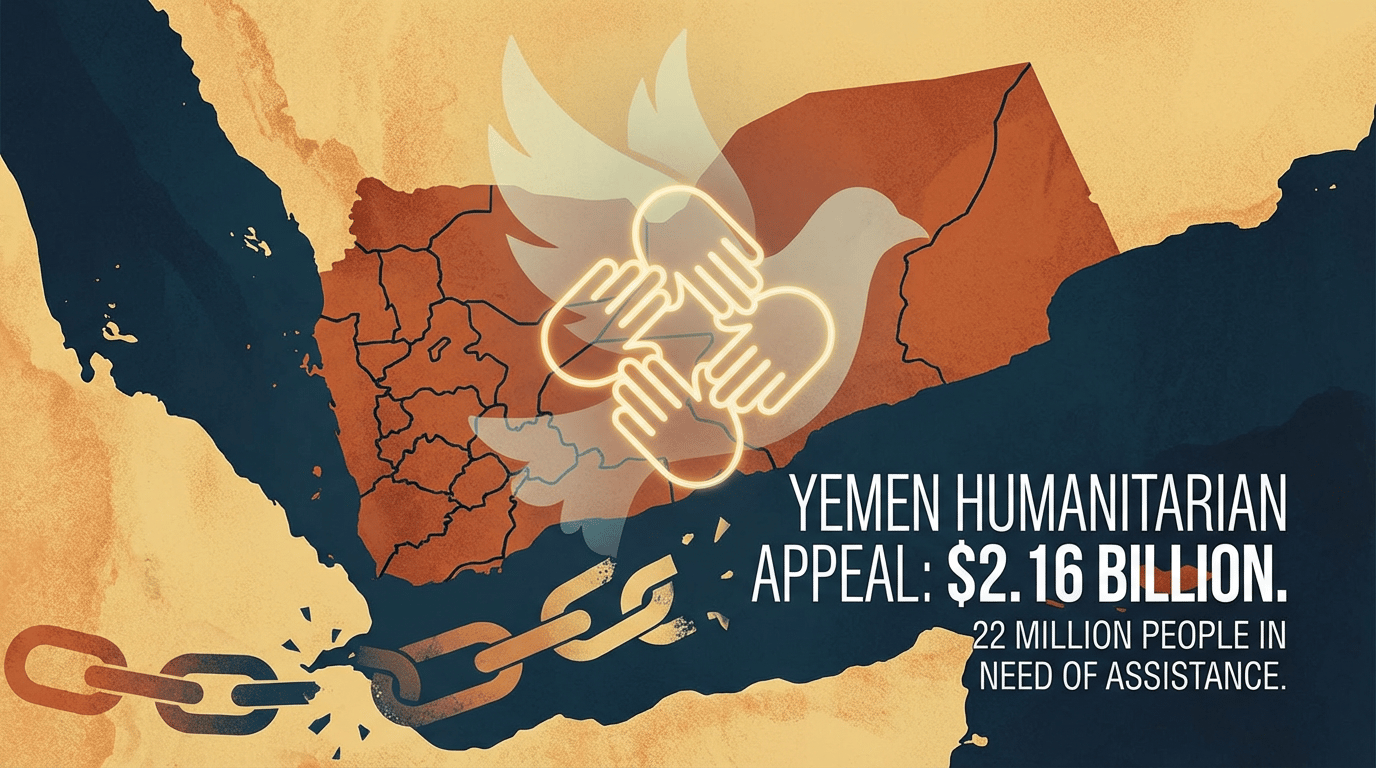
Description: Abstract or symbolic AI-generated illustration representing the United Nations humanitarian appeal for the Yemen crisis.
(Original creation for editorial use by EOBS.biz)
How we report: We select the day’s most important stories, confirm facts across multiple reputable sources, and avoid anonymous sourcing. Our goal is clear, balanced coverage you can trust—because transparency and verification matter for informed readers.