
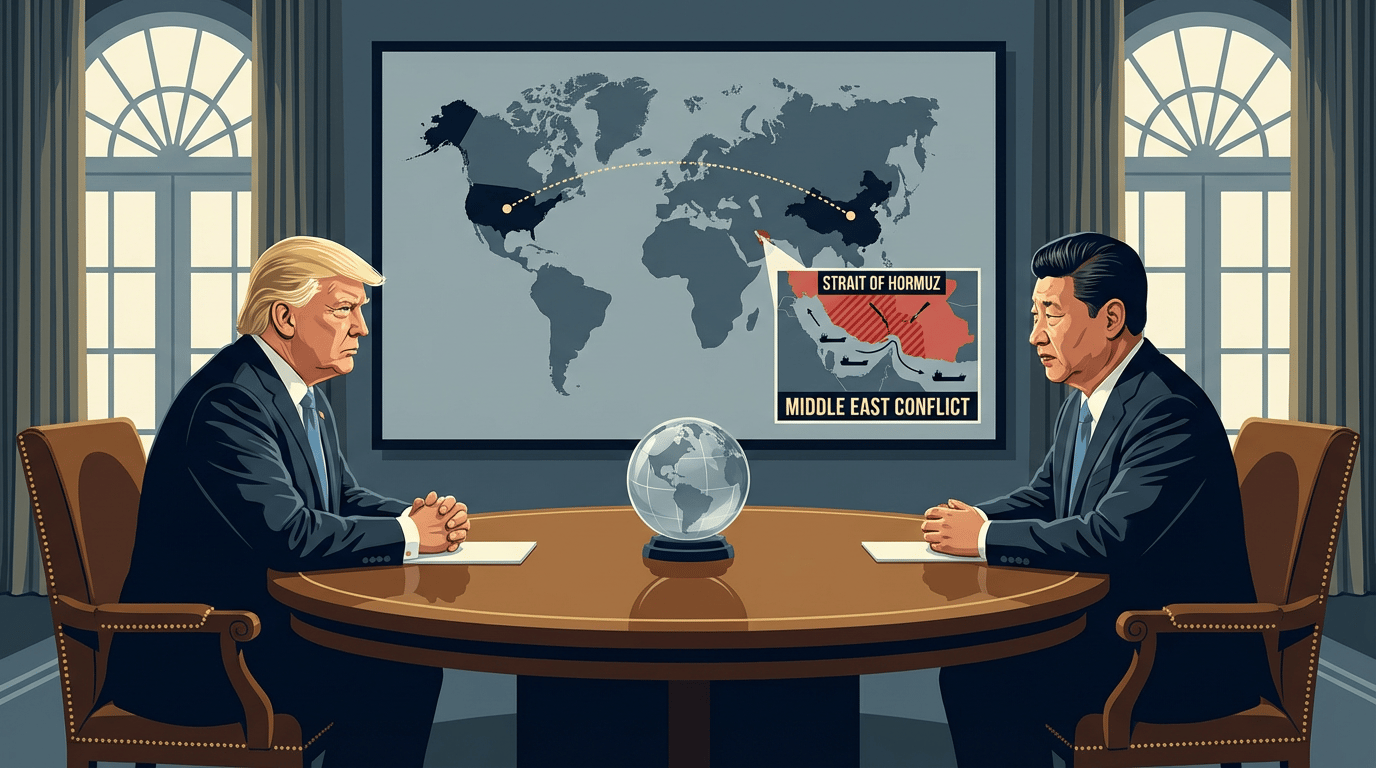
WASHINGTON — President Donald Trump said Monday he is delaying a planned high-stakes visit to China by approximately one month due to the escalating war with Iran, which has increasingly overshadowed U.S. foreign policy priorities. The announcement came as the administration seeks international assistance to secure the Strait of Hormuz amid disruptions to global oil shipments. Reports from BBC News, Associated Press, Al Jazeera, Reuters, Financial Times, and CNBC confirm the delay reflects shifting diplomatic priorities as the Iran conflict dominates administration focus. Each of the bullet points immediately below have been confirmed by at least four of the six respected sources we curated on this story.
- Trump told reporters at the White House that he requested the delay “a month or so” to remain in Washington to oversee the war effort, stating: “We’ve got a war going on. I think it’s important that I be here.”
- The planned meeting with Chinese President Xi Jinping had been scheduled for late March and was intended to address trade tensions and economic cooperation between the world’s two largest economies.
- U.S. Treasury Secretary Scott Bessent and other senior officials will continue trade negotiations with Chinese counterparts in the interim, though no specific timeline for rescheduling the summit has been announced.
- The delay underscores how the Iran war has complicated the administration’s efforts to reset relations with Beijing, even as both nations face economic pressures from the ongoing conflict in the Middle East.
Additional Details Reported
Trump’s decision to postpone the China summit represents a significant shift in diplomatic scheduling, as the administration had previously emphasized the importance of direct engagement with Xi to resolve trade disputes. The war with Iran, now entering its second week, has consumed increasing White House attention as military operations expand and international coalition-building efforts intensify.
The administration has been seeking China’s cooperation in securing the Strait of Hormuz, through which approximately one-fifth of global oil shipments pass. Any prolonged disruption to these shipments could have significant economic consequences for both the United States and China, which relies heavily on Middle Eastern oil imports.
Chinese officials have not publicly commented on the summit delay, though state media has extensively covered the Iran conflict and its potential impact on global energy markets. The rescheduling may provide additional time for both sides to prepare negotiating positions on contentious trade issues that have strained bilateral relations.
Image Attribution
Artificial Intelligence generated image / EOBS.biz
How we report: We select the day’s most important stories, confirm facts across multiple reputable sources, and avoid anonymous sourcing. Our goal is clear, balanced coverage you can trust—because transparency and verification matter for informed readers.