
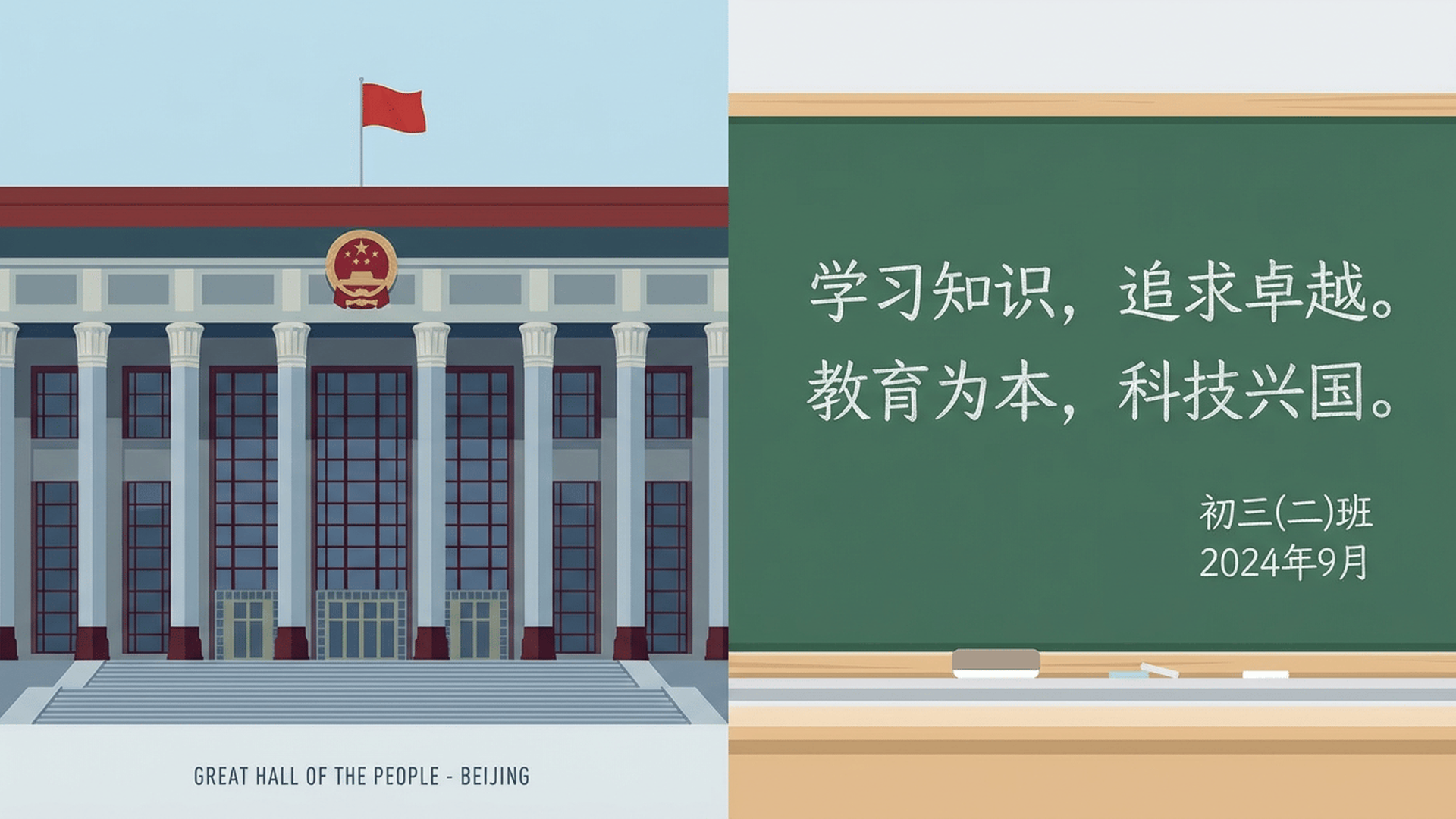
Beijing, China — China’s legislature approved a new ethnic unity law that makes Mandarin the default language of instruction in schools, a move officials say promotes national cohesion but critics say could erode minority languages and cultures, according to Reuters, BBC News, The Guardian, France 24, U.S. News & World Report, and The Straits Times.
- China’s legislature approved the ethnic unity law at the close of the annual National People’s Congress session.
- The law makes Mandarin the default language of instruction in schools, emphasizing integration across ethnic groups.
- Supporters say the measure strengthens national unity, while critics warn it could weaken minority languages and cultural identities.
Additional Details Reported
The legislation is formally titled “Promoting Ethnic Unity and Progress,” according to Reuters.
State media said the law is set to take effect on July 1, Reuters reported.
The measure also elevates Mandarin in public life and official business, and requires it to be displayed more prominently than minority scripts on public signage in bilingual settings, according to Reuters and The Guardian.
The BBC said the law mandates Mandarin instruction from before kindergarten through high school, while France 24 reported it requires students to have a basic grasp of Mandarin by the end of compulsory education.
Reuters and France 24 also reported provisions that allow legal liability for people outside China who engage in activities deemed to undermine ethnic unity.
Reuters said the law passed by a recorded vote of 2,756 in favor, with three against and three abstentions.
How we report: We select the day’s most important stories, confirm facts across multiple reputable sources, and avoid anonymous sourcing. Our goal is clear, balanced coverage you can trust—because transparency and verification matter for informed readers.
Image Attribution ▾
Illustration generated via Hedra based on an original editorial prompt describing China’s ethnic unity law and Mandarin language policy context. No real-event depiction. (Artificial Intelligence generated image / EOBS.biz)