
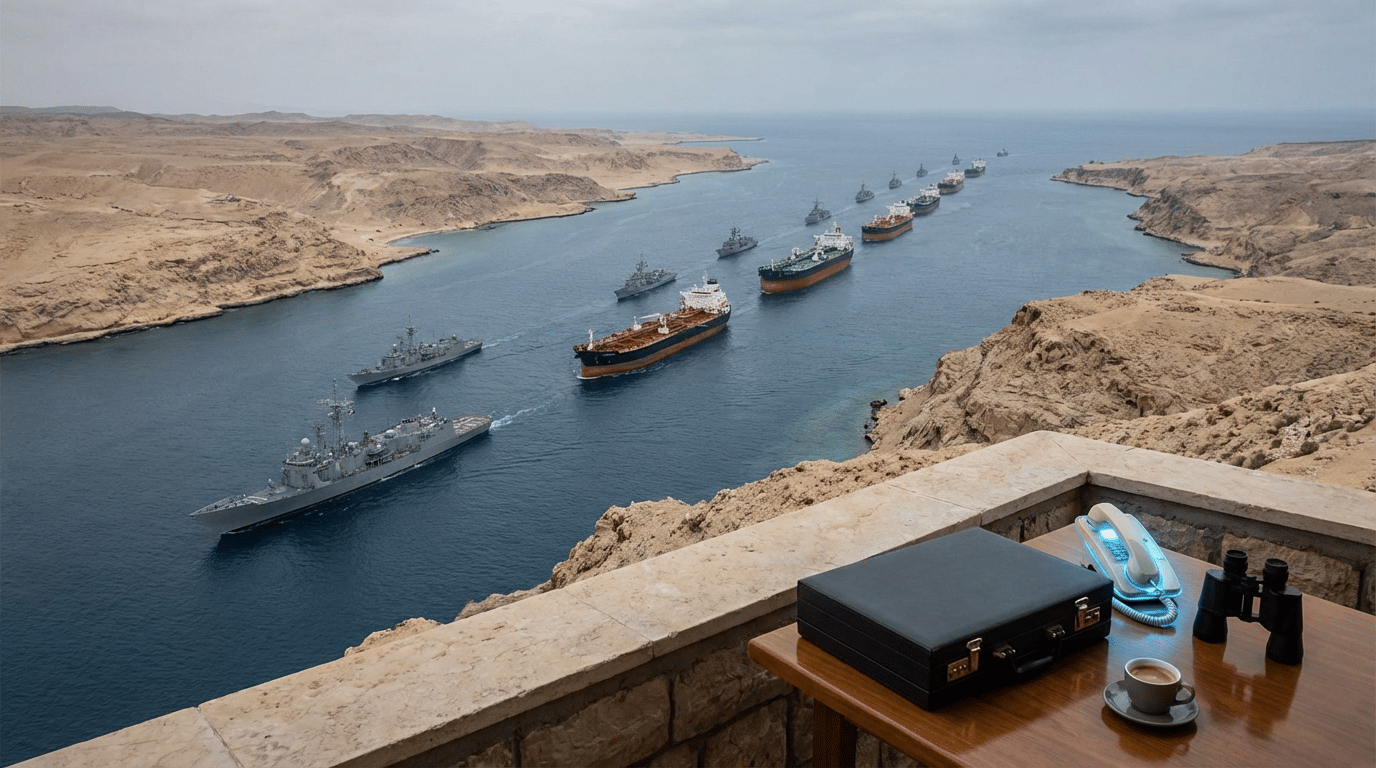
WASHINGTON — President Donald Trump is actively seeking international allies to join a naval coalition to secure the Strait of Hormuz amid the ongoing US-Israel war with Iran, even as a direct communications channel between US envoy Steve Witkoff and Iranian Foreign Minister Abbas Araghchi has reportedly been reactivated in recent days. The developments come as global oil prices have surged 40 to 50 percent following Iran’s effective blocking of the vital waterway through which one-fifth of the world’s traded oil flows. According to reports from Associated Press, BBC, Al Jazeera, Reuters, Axios, and The New York Times, the administration is facing significant resistance from traditional allies while simultaneously pursuing backchannel diplomatic communications. Each of the bullet points immediately below have been confirmed by at least four of the six respected sources we curated on this story.
• Trump has formally requested approximately six to seven countries to contribute warships to a coalition aimed at reopening the Strait of Hormuz, specifically naming China, Japan, South Korea, the United Kingdom, and France as nations that should participate, along with all NATO allies who receive oil through the waterway
• To date, no country has officially confirmed participation in the proposed naval coalition, with Australia, Japan, Poland, Sweden, and Spain explicitly stating they have no intentions of sending military ships to the region
• European leaders have largely rejected direct military involvement, with German Defence Minister Boris Pistorius stating there would be “no military participation” from Berlin, while UK Prime Minister Keir Starmer maintained Britain would “not be drawn into the wider war” despite discussing mine-hunting drone support
• Trump has indicated he may delay his planned late-March summit with Chinese President Xi Jinping in Beijing to focus on the Iran conflict, stating “we’re speaking to China” and “I have to be here, I feel” due to the ongoing war
• A direct communications channel between US envoy Steve Witkoff and Iranian Foreign Minister Abbas Araghchi has been reactivated in recent days according to Axios, providing a potential diplomatic backchannel even as military operations continue
• Iran has effectively blocked the Strait of Hormuz to all vessels except those carrying Iranian oil to allies such as India and China, causing global oil prices to spike dramatically and threatening worldwide economic stability
• Trump claimed Monday that more than 100 Iranian naval vessels have been “sunk or destroyed” since the conflict began on February 28, including more than 30 mine-laying ships, and asserted a 90 percent reduction in Iran’s ballistic missile launches
• The US and Israel have struck more than 7,000 targets across Iran according to Trump’s statements, while Iranian officials remain defiant with Foreign Minister Araghchi indicating Tehran is “ready to continue the war wherever it may lead”
Additional Details Reported
The White House is continuing its pressure campaign despite lukewarm responses from allies. White House press secretary Karoline Leavitt argued that other countries were benefiting directly from Trump’s attempt to disarm the Iranian regime, stating “this is something not just the United States but the entire Western world has agreed with for many, many years.”
Trump has taken an increasingly critical tone toward allies who have declined to join the coalition. “Some are countries that we’ve helped for many, many years,” Trump said Monday. “We’ve protected them from horrible outside sources, and they weren’t that enthusiastic.” Without specifying a country, he referenced nations where the US maintains 45,000 soldiers for protection, noting that when asked about contributing mine sweepers, some responded they would “rather not get involved, sir.”
The president has suggested that keeping the Strait of Hormuz open might involve attacks on the Iranian coastline, stating he was looking for “people who are going to knock out some bad actors that are along the shore.” The US has already targeted mine-laying boats at berth in Iranian ports.
France has shown relatively more willingness to assist compared to other European allies, with President Emmanuel Macron indicating he was trying to put together a coalition to escort vessels and guarantee freedom of navigation. However, French Defence Minister Catherine Vautrin later clarified there were no immediate plans to send vessels into the Strait of Hormuz, stating such action could only happen once the “hottest phase” of the conflict was over.
Treasury Secretary Scott Bessent attempted to downplay concerns about potential delays to the China summit, stating in a CNBC interview that any postponement would be due to “logistics” rather than disputes over the strait, explicitly urging investors not to react negatively should Trump put off his trip.
The conflict has taken a significant humanitarian toll. According to Al Jazeera, at least 1,444 people have been killed in Iran, 20 across the Gulf, and 15 in Israel since the war began, with 13 US soldiers also killed. The United Nations refugee agency has reported that as many as 3.2 million people have been displaced inside Iran during the fighting.
Amnesty International has accused the US of responsibility for a strike on a girls’ school in Minab that killed at least 170 people, most of them children. The rights group’s statement came shortly after Trump’s claims about the success of military operations against Iranian targets.
Former British military officials have expressed skepticism about the feasibility of coalition operations. Gen Sir Nick Carter, former chief of the Defence Staff, told the BBC that NATO “was not an alliance that was designed for one of the allies to go on a war of choice and then oblige everybody else to follow.” Former Royal Navy commander Tom Sharpe noted that the latest British mine-hunting technologies had yet to be tested in combat, stating “we’re probably going to find out in the next few weeks whether or not it works.”
Iran’s Revolutionary Guard maintains capabilities beyond naval mines, including armed fast boats, naval “suicide” drones, and shore-based missiles that could disrupt shipping operations. Recent images released by Iran’s Fars News Agency appeared to show large numbers of boats and drones being stored in underground tunnels, suggesting Tehran has long prepared for such a confrontation.
How we report: We select the day’s most important stories, confirm facts across multiple reputable sources, and avoid anonymous sourcing. Our goal is clear, balanced coverage you can trust—because transparency and verification matter for informed readers.
Image Attribution ▾
Image: Naval coalition in Strait of Hormuz with diplomatic backchannel elements
Source: Generated via Hedra AI
License: AI-generated image for editorial use
Attribution: (Artificial Intelligence generated image / EOBS.biz)
Date: March 16, 2026