
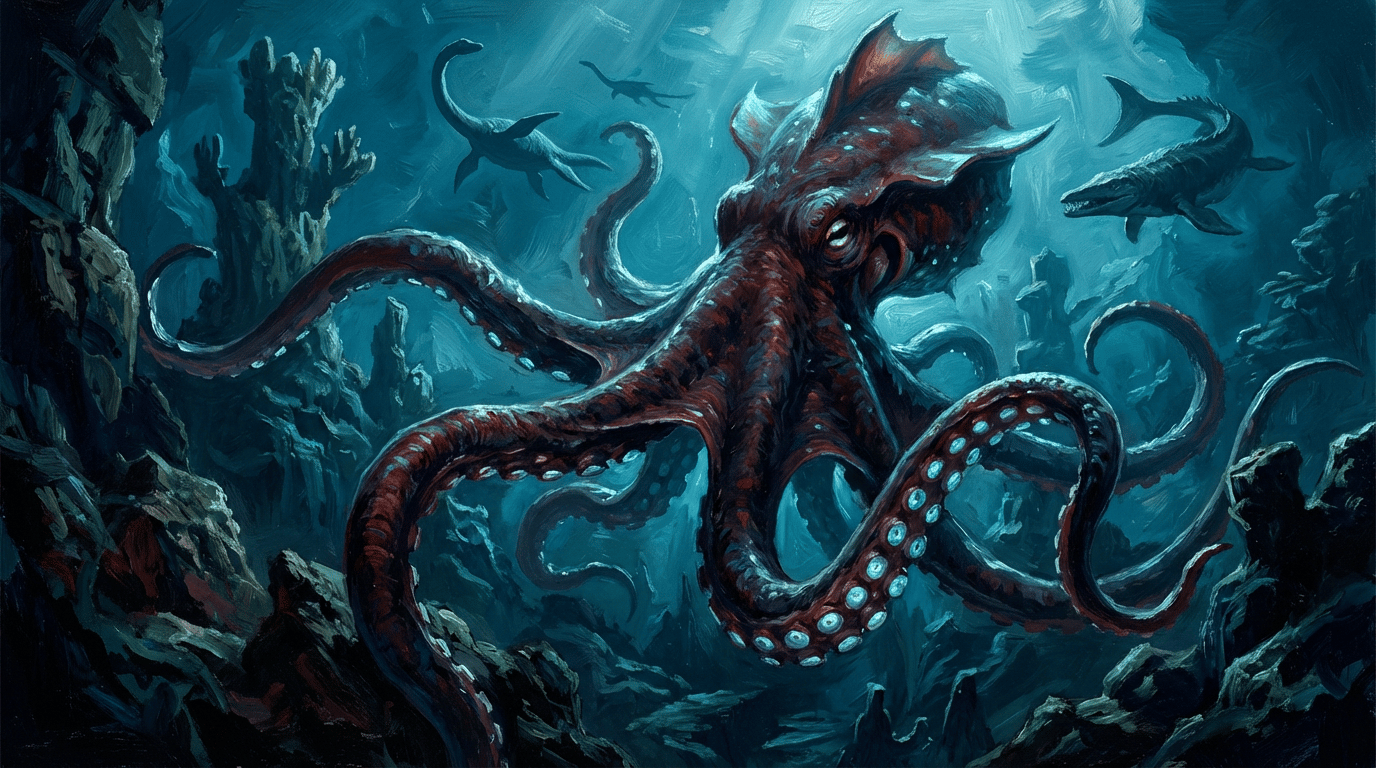
HOKKAIDO, JAPAN — New research suggests that colossal, “kraken-like” octopuses were apex predators in the world’s oceans during the Cretaceous period, challenging long-held views that marine ecosystems were exclusively dominated by large vertebrate predators. These massive cephalopods, some reaching lengths of up to 62 feet, actively hunted and crushed the shells and bones of their prey, positioning them at the top of the ancient marine food chain. Each of the bullet points immediately below have been confirmed by at least four of the six respected sources we curated on this story: cbsnews.com, nationalgeographic.com, theguardian.com, eurekalert.org, sciencedaily.com, apnews.com.
- Paleontologists, primarily from Hokkaido University, analyzed fossilized jaws of ancient octopuses, including species like *Nanaimoteuthis jeletzkyi* and *Nanaimoteuthis haggarti*.
- These giant octopuses could reach lengths comparable to large marine reptiles, with evidence from their robust beaks indicating powerful crushing capabilities for hunting.
- Their emergence as top predators revises the understanding of Cretaceous marine food webs, showing that large, intelligent invertebrates also played dominant roles.
- The fossilized beaks revealed extensive wear and damage, suggesting a voracious predatory lifestyle that challenged vertebrate dominance in prehistoric oceans.
- The study highlights the evolution of soft bodies combined with advanced mobility and intelligence, allowing these cephalopods to become highly effective hunters.
Rethinking Ancient Marine Ecosystems
The discovery of these colossal octopuses fundamentally alters our understanding of marine ecosystems during the Cretaceous period. It highlights a dynamic prehistoric world where invertebrates competed fiercely and successfully with their vertebrate counterparts for dominance at the top of the food chain.
This research not only sheds light on the evolutionary history of cephalopods but also encourages a broader re-evaluation of how intelligence and unique adaptations can shape predatory roles in ancient environments, even those thought to be monopolized by other life forms.
The ongoing analysis of fossilized remains and the application of advanced research techniques continue to reveal surprising insights into the complexity and diversity of life millions of years ago, pushing the boundaries of what we thought was possible in Earth’s deep past.
How we report:: We select the day’s most important stories, confirm facts across multiple reputable sources, and avoid anonymous sourcing. Our goal is clear, balanced coverage you can trust—because transparency and verification matter for informed readers.
Image Attribution
Attribution: AI-generated image (Hedra.com for EOBS.biz)