
BALTIMORE, Md. — A first-in-human clinical trial found that physicians using patient-specific digital replicas of diseased hearts to plan ablation for ventricular tachycardia achieved markedly stronger one-year outcomes than the conventional benchmark, a result reported by Associated Press, Science News, Johns Hopkins University, EurekAlert, News-Medical, and the New England Journal of Medicine. Each of the bullet points immediately below have been confirmed by at least four of the six respected sources we curated on this story.
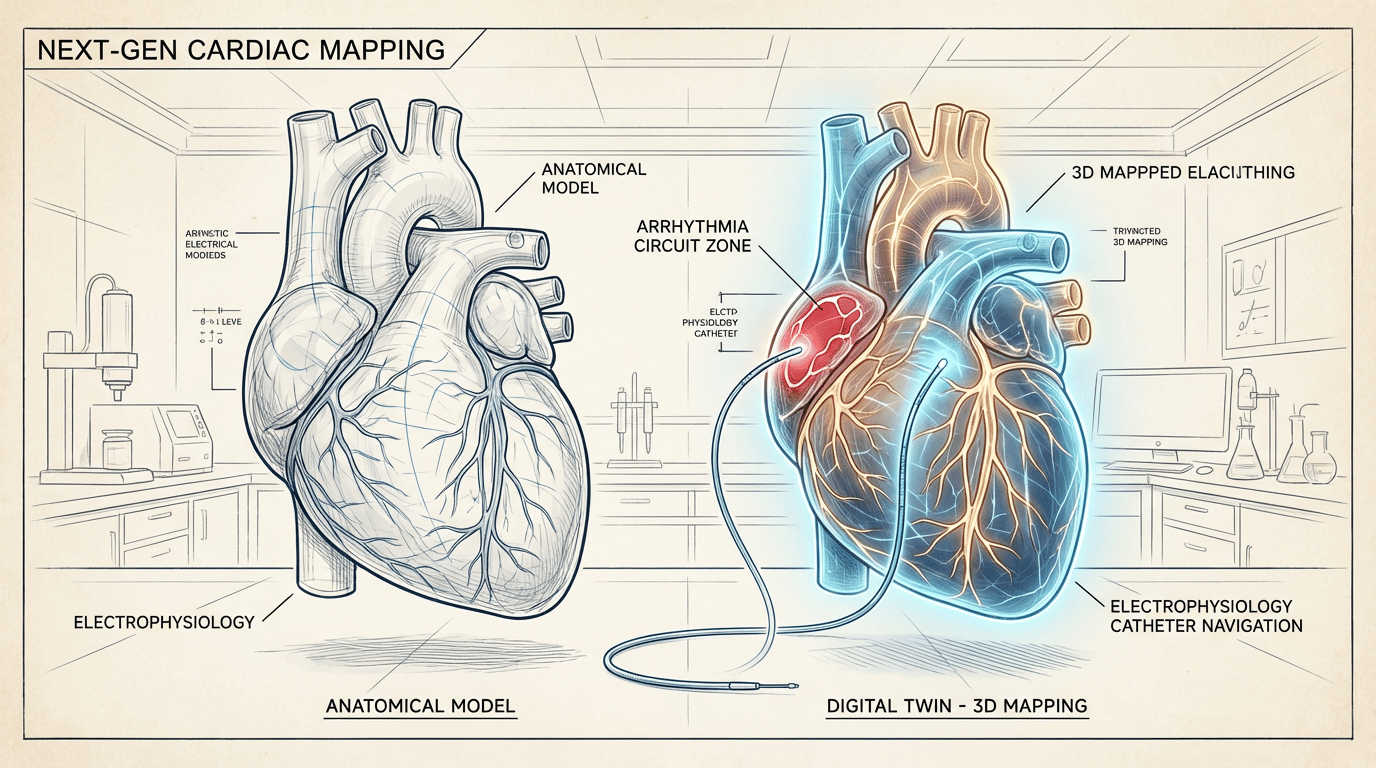
- The FDA-approved TWIN-VT pilot used personalized digital heart models built from contrast-enhanced 3D MRI scans to pre-plan where ablation should target arrhythmia circuits.
- The trial enrolled 10 patients with ventricular tachycardia after prior heart attacks, a group that typically faces difficult repeat procedures.
- Doctors used the simulated treatment plans as a procedural roadmap to target less tissue while improving precision during catheter ablation.
- At the end of each procedure, physicians could no longer trigger ventricular tachycardia in any participant during testing.
- After more than one year of follow-up, all 10 participants remained free of sustained dangerous ventricular tachycardia; two had only brief early recovery episodes.
- Eight participants stopped anti-arrhythmia medication and two reduced dosage, while the trial’s long-term rhythm-control result outperformed the commonly cited ~60% conventional success rate.
Additional Details Reported
Clinical Context
AP’s report described ventricular tachycardia as a major cause of sudden cardiac arrest and said the condition can be especially hard to treat when scar tissue disrupts the heart’s lower-chamber electrical pathways.
Science News reported that, in this pilot, pre-procedure simulation helped teams move from broad exploratory mapping toward targeted intervention, with procedure durations in some cases dropping substantially.
What Investigators Plan Next
Johns Hopkins and EurekAlert’s release said investigators intend to validate the approach in larger multicenter studies and are already extending digital-twin workflows to other rhythm disorders, including atrial fibrillation.
The Hopkins team also said it is working to speed delivery of model outputs so treatment-planning guidance can be generated rapidly in routine clinical settings instead of only in highly specialized research workflows.
Image Attribution
Attribution: AI-generated image (Hedra.com for EOBS.biz)
How we report: We select the day’s most important stories, confirm facts across multiple reputable sources, and avoid anonymous sourcing. Our goal is clear, balanced coverage you can trust—because transparency and verification matter for informed readers.