
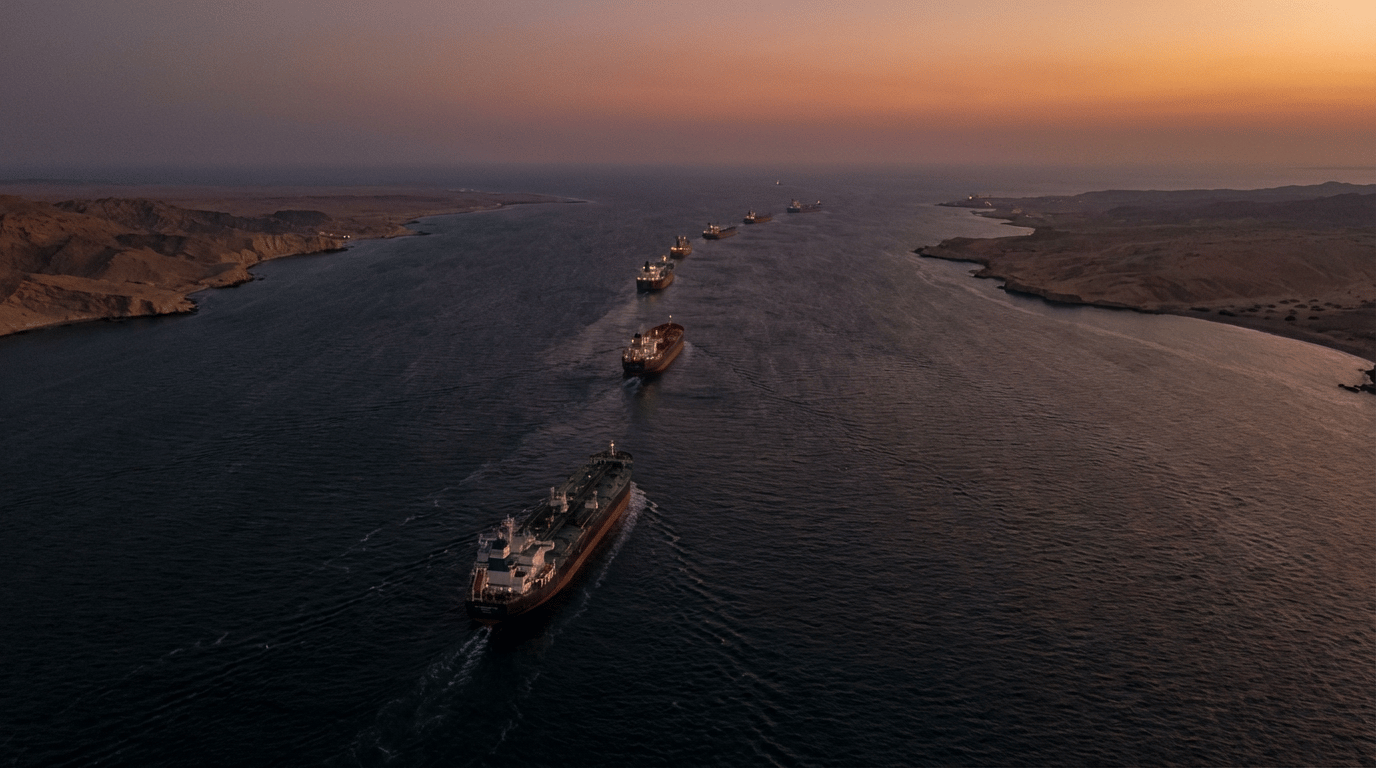
SINGAPORE — Shipping disruptions in the Strait of Hormuz have tightened a key global oil artery and deepened market volatility amid escalating Iran-centered conflict, according to Associated Press, Reuters, BBC News, Al Jazeera, The Guardian, CBS News. Each of the bullet points immediately below have been confirmed by at least four of the six respected sources we curated on this story.
- Commercial vessel traffic through and around the Strait of Hormuz has dropped sharply from normal levels as shipping risk and war premiums rise.
- The strait remains one of the world’s most critical energy chokepoints, carrying a significant share of globally traded crude and petroleum products.
- Oil prices have risen materially since the latest military escalation, with benchmark crude repeatedly spiking as traders price in prolonged disruption risk.
- Governments and shipping operators are rerouting, delaying, or hardening transit plans, raising freight costs and delivery uncertainty across multiple regions.
- Central banks and finance ministries are watching second-order inflation effects from energy and transport costs as the conflict persists.
Additional Details Reported
Some outlets reported intermittent convoy-style or negotiated transits for select tankers, while others described temporary pauses by private carriers waiting for threat reassessments.
Coverage also highlighted the risk to LNG and refined-product chains, with analysts warning that continued disruption could strain inventories and widen regional price gaps.
Diplomatic channels remain active, but reporting diverges on the timing and durability of any de-escalation framework.
Image Attribution ▾
Attribution: AI-generated image (EOBS editorial illustration).
How we report: We select the day’s most important stories, confirm facts across multiple reputable sources, and avoid anonymous sourcing. Our goal is clear, balanced coverage you can trust—because transparency and verification matter for informed readers.