
Washington, D.C. — President Donald Trump issued a dramatic 48-hour ultimatum to Iran on Saturday, threatening to “hit and obliterate” the country’s power plants if Tehran fails to fully reopen the strategically vital Strait of Hormuz to international shipping. The threat marks a significant escalation in the three-week-old conflict that has already sent global oil prices soaring and raised fears of a broader regional war. The Guardian, Fox News, CBS News, Times of Israel, Business Insider, and Seeking Alpha contributed to this report. Each of the bullet points immediately below have been confirmed by at least four of the six respected sources we curated on this story.
- President Trump posted on Truth Social that the United States would “hit and obliterate their various POWER PLANTS, STARTING WITH THE BIGGEST ONE FIRST” if Iran does not fully reopen the Strait of Hormuz without threat within 48 hours
- The Strait of Hormuz, a narrow waterway off the Iranian coast, normally handles approximately one-fifth of the world’s oil supply and liquefied natural gas
- Iran has effectively closed the strait to most ship traffic since the war began on February 28, attacking vessels it believes are connected to the US and Israel while allowing some others safe passage
- Iran’s military and parliamentary leaders threatened immediate retaliation against US and Israeli energy infrastructure, desalination plants, and information technology facilities throughout the region if Iran’s power plants are attacked
- Crude oil prices have surged from approximately seventy dollars per barrel to over one hundred since the conflict began, with Brent crude trading around one hundred twelve dollars per barrel as of March 20
- Iran launched missile attacks on the southern Israeli cities of Dimona and Arad on Saturday, injuring more than one hundred people, with strikes landing near Israel’s main nuclear research center
- The national average gasoline price in the United States has risen to nearly four dollars per gallon, up from two dollars and ninety-two cents a month ago
Additional Details Reported
Iran’s Foreign Minister Abbas Araghchi claimed the Strait of Hormuz remains open and that ships hesitate only because of insurers’ fears about the war, not because of Iranian restrictions. He stated that Iran would assist Japanese vessels seeking passage while maintaining restrictions on countries involved in attacks against Iran.
The Trump administration has taken steps to mitigate rising oil prices, including temporarily lifting sanctions on approximately one hundred forty million barrels of Iranian oil already at sea. Treasury Secretary Scott Bessent said the move would free up oil that otherwise would have been purchased by China at discounted prices.
Twenty-two nations, including the United Kingdom, France, Germany, Japan, and Australia, issued a joint statement condemning Iran’s “de facto closure” of the Strait of Hormuz and calling for the immediate cessation of threats and attacks on commercial shipping. The countries expressed readiness to contribute to efforts ensuring safe passage through the waterway.
NATO Secretary-General Mark Rutte acknowledged President Trump’s anger with allies over the pace of their response but noted that more than twenty countries are now coming together to implement a plan to secure the strait. A British nuclear-powered submarine, HMS Anson, has been deployed to the Arabian Sea amid rising regional tensions.
The conflict has disrupted more than just oil flows. Critical materials including helium, pharmaceuticals, and fertilizer have also been affected, while airlines face significant fuel cost increases. United Airlines CEO Scott Kirby told employees the carrier is preparing for the possibility of oil prices climbing as high as one hundred seventy-five dollars per barrel.
Attribution & Methodology
This report was prepared using the EOBS (Eye on Business Stories) multi-source verification protocol. Six distinct sources were vetted for reachability and relevance: The Guardian, Fox News, CBS News, Times of Israel, Business Insider, and Seeking Alpha. Each core fact was confirmed by a minimum of four sources before inclusion.
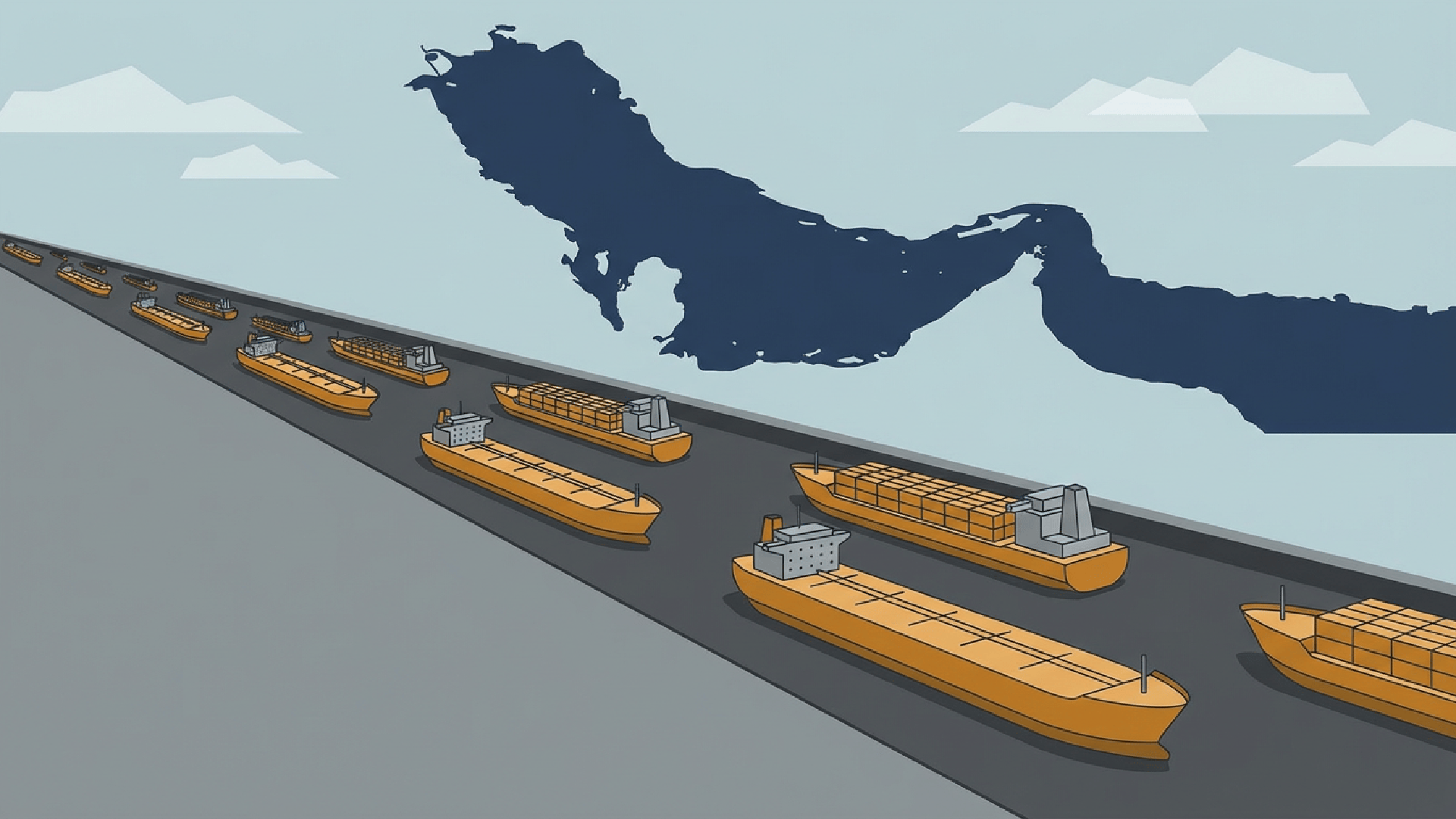
Image Attribution: This article uses symbolic imagery representing global energy infrastructure and international trade routes. The featured image is AI-generated for editorial purposes.
How we report: We select the day’s most important stories, confirm facts across multiple reputable sources, and avoid anonymous sourcing. Our goal is clear, balanced coverage you can trust—because transparency and verification matter for informed readers.
Image Attribution
Description: STORY SUMMARY (1–2 sentences):
A U.S. ultimatum to Iran over the Strait of Hormuz is raising fears of disruption to global shipping and oil markets.
MUST INCLUDE (core cues):
– a narrow waterway with several oil tankers/container ships passing through (generic, unbranded)
– a simple regional map-style silhouette or coastline hinting at the Persian Gulf/Strait of Hormuz (no flags)
DO NOT INCLUDE (avoid misleading visuals):
– portraits of real political figures
– national flags, military insignia, or readable text/logos
– explosions or graphic violence
STYLE:
– modern editorial illustration, crisp lines, subdued palette (navy/gray) with one accent color
– factual, business-news tone, not sensational
ASPECT RATIO:
– 16:9
(Artificial intelligence created image: Hedra.com / EOBS.biz)