
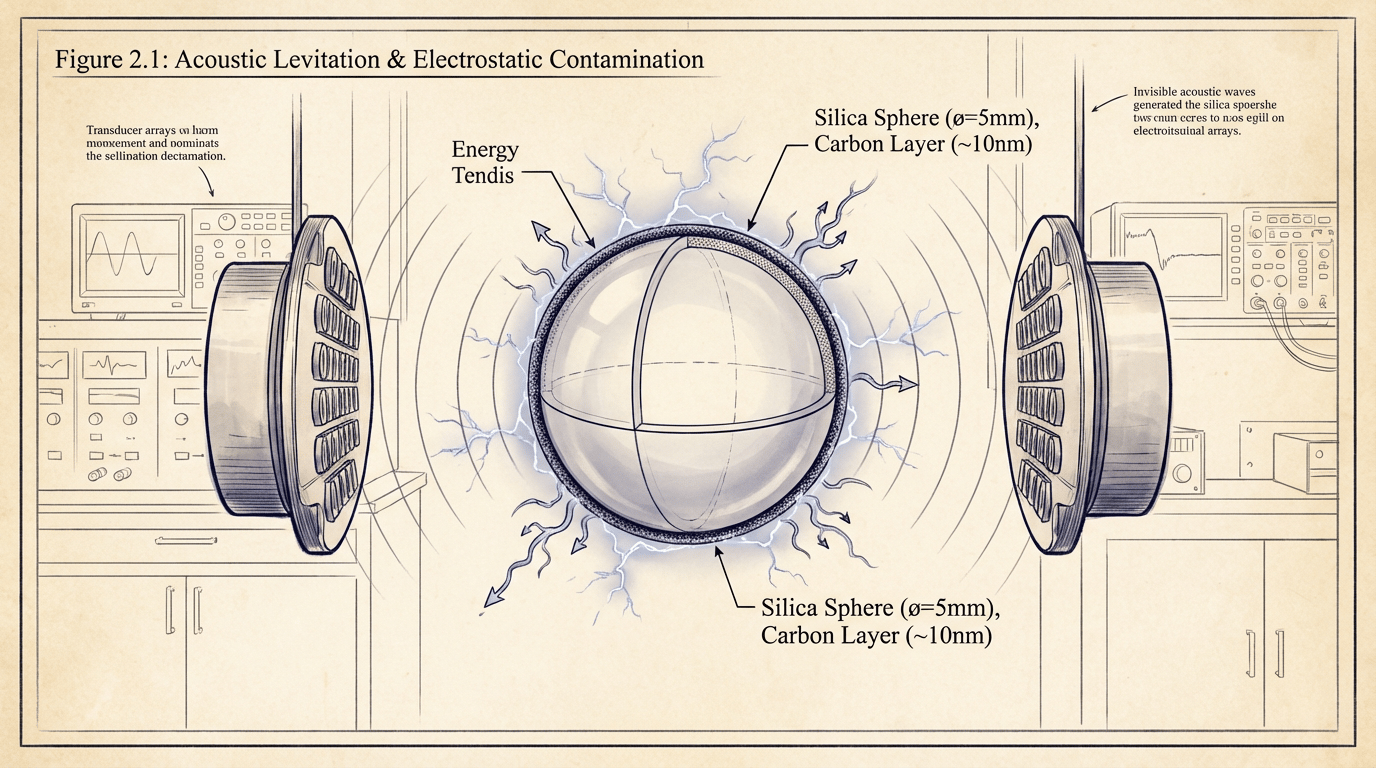
Vienna, Austria — Scientists have solved a long-standing mystery about static electricity, discovering that an invisible layer of carbon contamination on material surfaces determines how electric charge flows between identical materials. The finding, published March 18 in Nature, resolves decades of confusion about why two objects made of the same substance can exchange electrical charge — a phenomenon that theoretically should not occur. Sources: Science News Physics World EurekaAlert IDW Online Discover Magazine Institute of Science and Technology Austria. Each of the bullet points immediately below have been confirmed by at least four of the six respected sources we curated on this story.
Core Facts
- Researchers identified environmental carbon-based molecules as the determining factor in how electric charge flows when identical insulating materials come into contact.
- The study was led by physicists at the Institute of Science and Technology Austria (ISTA), including assistant professor Scott Waitukaitis and postdoc Galien Grosjean.
- Scientists used acoustic levitation — suspending tiny silica spheres with sound waves — to study charge transfer without physical contact that could corrupt measurements.
- When samples were cleaned through heat treatment or plasma exposure, removing their carbon layers, they consistently charged negatively upon contact.
- As the carbon contamination layer returned over several hours of air exposure, the original variable charging patterns were restored, directly correlating carbon presence with charge exchange behavior.
- The discovery has implications for understanding natural phenomena including volcanic lightning, Saharan dust storms, protoplanetary disk formation, and electrically charged dust hazards on Mars and the Moon.
Additional Details Reported
The research challenges previous theories that suggested surface charging resulted from a random “dairy cow pattern” of surface properties or from humidity and water molecules adhering to materials. “We focused myopically on water for a long time, which led us down so many wrong turns,” Waitukaitis told Physics World. “We took those leading theories in the field for granted, and they took us off track.”
The thin layer of carbon-rich molecules, which Waitukaitis colloquially refers to as “schmutz” or “carbon cake,” grows on virtually every object exposed to air due to ever-present organic molecules in the environment. This contamination layer is nanoscopic in scale but profoundly impacts the triboelectric charging behavior of materials.
The experimental apparatus required extraordinary precision. The team bounced a half-millimeter silica sphere on a silica plate thousands of times consecutively without losing the particle, measuring charge transfer to within 500 electrons. The statistical significance of their findings exceeded seven sigma, well above the standard threshold for particle physics discoveries.
The study’s findings may help explain energy transfer mechanisms that could have kick-started life on Earth. Scientists have long theorized that energy from volcanic lightning may have helped convert primordial molecules into the first amino acids. The research also provides context for recent observations by NASA’s Perseverance rover, which may have detected evidence of lightning amid dust storms on Mars.
Silicon dioxide, or silica, was chosen as the experimental material because it is one of the most abundant solid materials in the universe, making up most of Earth’s crust as well as dust on the Moon and Mars. Understanding how these particles exchange charge is critical for predicting electrical disturbances in extraterrestrial environments.
How we report: We select the day’s most important stories, confirm facts across multiple reputable sources, and avoid anonymous sourcing. Our goal is clear, balanced coverage you can trust—because transparency and verification matter for informed readers.
Image Attribution ▾
Description: Scientific illustration of a silica sphere suspended by acoustic levitation, showing carbon molecules on the surface and subtle electrical charge visualization. Detailed technical ink-and-wash style, blueprint aesthetic, neutral color palette with blue accents for energy.
(Artificial intelligence created image: Hedra.com / EOBS.biz)