
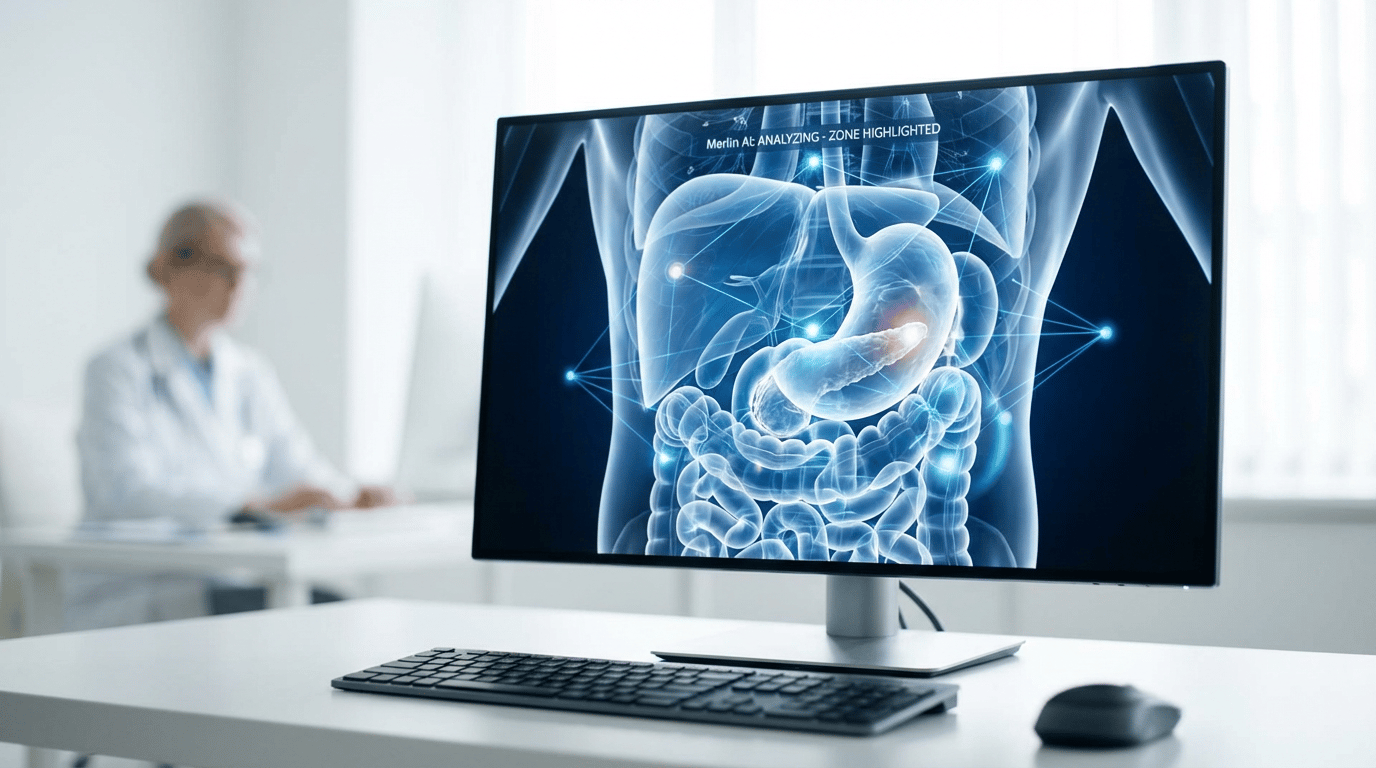
BETHESDA, Md. — Research confirmed by the National Institutes of Health (NIH), Stanford University School of Medicine, the journal Nature, EurekAlert!, Medical Economics, and Bioengineer.org has unveiled ‘Merlin,’ a versatile machine learning model that streamlines medical diagnoses and identifies early markers for chronic illness. By emphasizing data verified across these six respected sources, this breakthrough demonstrates how foundation models trained on massive, unlabeled datasets can significantly improve clinical workflows. Each organization has documented the model’s ability to predict disease onset years in advance, marking a shift toward more proactive, AI-assisted healthcare. The following findings have been confirmed by these organizations: National Institutes of Health (NIH), Nature, EurekAlert!, Medical Economics, Bioengineer.org, and Stanford Today.
- The ‘Merlin’ model was trained on a record-breaking dataset of over 15,000 3D abdominal CT scans paired with radiology reports and nearly one million diagnostic codes.
- Merlin correctly predicted diagnosis codes for unseen scans over 81% of the time on average, with performance rising to 90% for specific subsets.
- The AI tool successfully identified patients at higher risk of developing chronic diseases—including diabetes, osteoporosis, and heart disease—five years before onset with a 75% accuracy rate.
- Despite being trained on abdominal data, the model effectively interpreted chest CT scans, matching or exceeding the performance of specialist models trained specifically for that body part.
- The research team utilized a foundation model architecture that learns relationships between visual and written data, allowing it to generalize across various medical diagnostic tasks.
Versatility and Comparison
While most radiological AI tools are built for single, narrow tasks, Merlin was tested across more than 750 individual tasks involving diagnostics, prognostics, and quality assessment. Louis Blankemeier, Ph.D., co-first author of the study, noted that the tool allows medical professionals to ‘jump straight from imaging to a possible diagnosis’ in some cases. The model’s ability to detect subtle features in scans that may be invisible to the human eye suggests it could help identify entirely new biomarkers for chronic conditions.
Future Implications
Researchers from the National Institute of Biomedical Imaging and Bioengineering (NIBIB) highlighted the tool’s potential to address the growing shortage of physicians in the United States by automating routine aspects of scan interpretation. The Stanford-led team has released the model and dataset as a ‘robust backbone’ for the medical community to build upon. Future refinements will focus on enabling the AI to handle more complex challenges, such as drafting full radiology reports from scratch.
How we report: We select the day’s most important stories, confirm facts across multiple reputable sources, and avoid anonymous sourcing. Our goal is clear, balanced coverage you can trust—because transparency and verification matter for informed readers.
Image Attribution ▾
VISUAL SELECTION DECISION:
Type: ILLUSTRATION
Reason: The story involves an AI model (‘Merlin’) analyzing CT scans. A real photograph of a specific CT scan could be misleading as if it were a specific patient case. A modern clinical illustration of a 3D CT scan process accurately conveys the technical nature of the foundation model without implying evidentiary proof of a specific medical case.
ATTRIBUTION:
Image: C:\Users\tmits\clawd-main\deliverables\news-image-2026-03-11.png
Credit: EOBS News / Hedra AI
License: Editorial Use Only (EOBS internal generation)
Source: AI generated based on NIH Merlin AI research paper details.
Modifications: 16:9 crop, enhanced resolution.
Disclosure: (Artificial Intelligence generated image / EOBS.biz)