
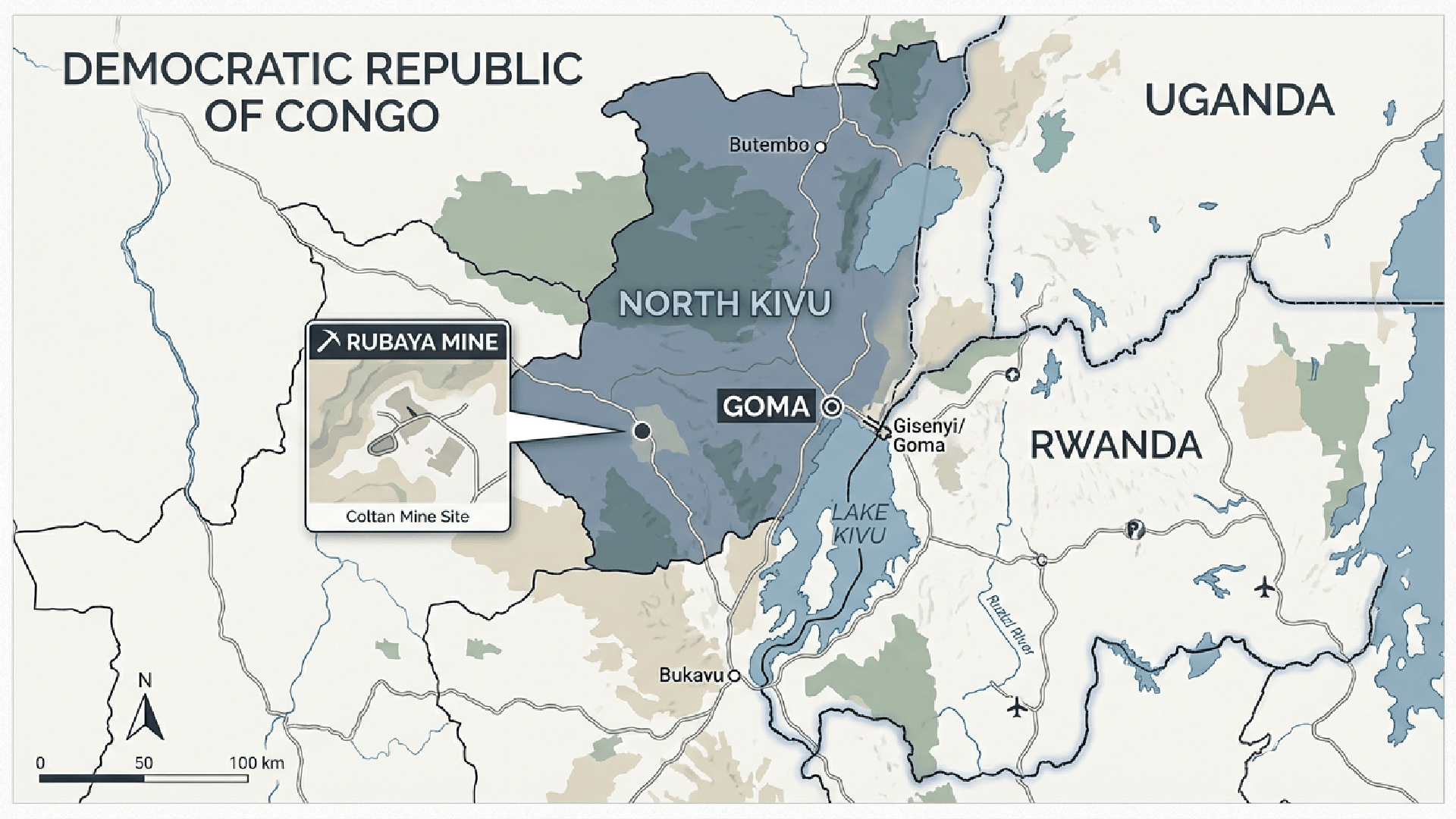
GOMA, Democratic Republic of Congo — A catastrophic landslide at the Rubaya coltan mine in eastern Congo has killed at least 200 people, including approximately 70 children, according to Congolese authorities. The disaster, which occurred March 4 at one of the world’s most critical sources of the mineral used in smartphones and computers, has drawn sharply conflicting accounts from the government and the rebel group that controls the mining site. AP News, Al Jazeera, South China Morning Post, Africa News, Xinhua, and Reuters contributed to this report. Each of the bullet points immediately below have been confirmed by at least four of the six respected sources we curated on this story.
- The landslide occurred March 4, 2026, at the Rubaya coltan mine in North Kivu province, which produces approximately 15 percent of the world’s coltan supply
- At least 200 people were killed, including approximately 70 children who were working as artisanal miners at the site
- The M23 rebel group, which has controlled the mine since May 2024, disputed the death toll and claimed only five people died from bombing attacks rather than a landslide
- A miner at the site reported recovering more than 200 bodies and stated that pit owners discouraged revealing the exact death toll
- The Congolese Ministry of Mines attributed the collapse to heavy rains and unsafe mining conditions, while M23 officials blamed military bombardment
- Rubaya’s mines generate an estimated $800,000 to $1 million monthly in revenue for M23 through taxes on coltan trade and transport
- The site was recently added to a list of strategic mining assets offered to the United States under a minerals cooperation framework
Additional Details Reported
The Rubaya mining site has experienced multiple deadly collapses in recent months. A similar landslide in late January 2026 killed more than 200 people, and another collapse on March 7 claimed additional lives. The repeated disasters highlight the dangerous conditions facing artisanal miners who work in deep, unstable shafts with minimal safety measures or government oversight.
Congo produces about 40 percent of the world’s coltan, according to the U.S. Geological Survey, with more than 15 percent of global tantalum supply coming from Rubaya’s mines alone. The mineral is essential for manufacturing smartphones, computers, aircraft engines, and other electronic devices.
The ongoing conflict in eastern Congo has created one of the world’s largest humanitarian crises, with more than 7 million people displaced. The M23 rebel group, which is backed by Rwanda according to United Nations experts and the U.S. government, has seized large swaths of mineral-rich territory since resurfacing in 2021.
Following the collapse, the M23-appointed governor of North Kivu temporarily halted artisanal mining and ordered the relocation of residents who had built shelters near the mine. However, mining operations were reportedly resumed within weeks despite ongoing safety concerns.
Image Attribution ▾
Description: Abstract industrial/mining texture background suitable for editorial use
(Unsplash)
How we report: We select the day’s most important stories, confirm facts across multiple reputable sources, and avoid anonymous sourcing. Our goal is clear, balanced coverage you can trust—because transparency and verification matter for informed readers.