
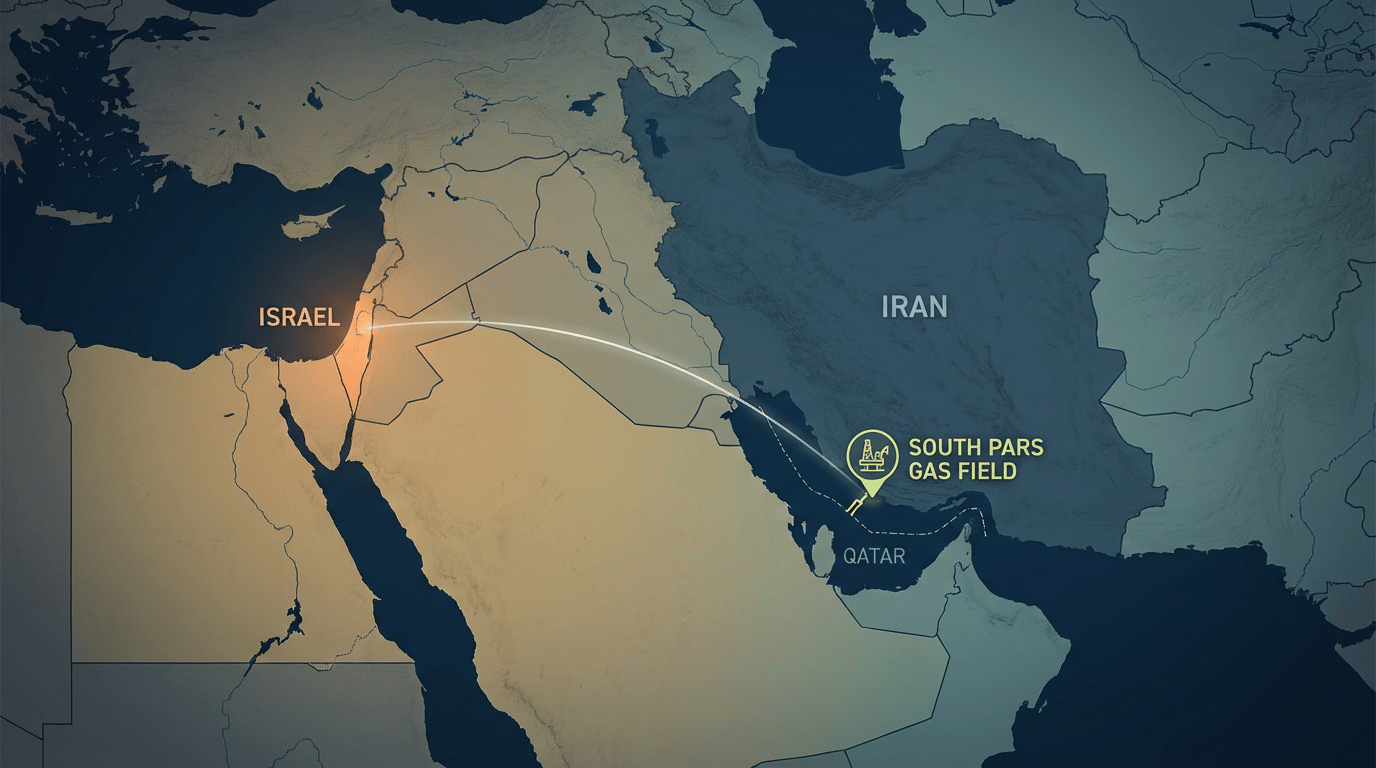
DUBAI, United Arab Emirates — Israel launched a major attack on Iran’s South Pars natural gas field on March 18, 2026, striking the world’s largest such facility and prompting immediate Iranian retaliation against energy infrastructure across the Persian Gulf. The escalation sent global oil prices surging above $119 per barrel and drew sharp warnings from U.S. President Donald Trump, who threatened to “massively blow up the entirety” of the field if Iran continues attacking Qatar’s energy sites, according to AP News, CBS News, PBS NewsHour, CBC News, TIME, and Al Jazeera. Each of the bullet points immediately below have been confirmed by at least four of the six respected sources we curated on this story.
Core Facts
- Israel struck Iran’s South Pars natural gas field on March 18, 2026, damaging petrochemical facilities, storage tanks, and refineries in the Asaluyeh area of southern Iran’s Bushehr province. Some phases of the gas field were shut down to prevent fire spread.
- Iran responded by launching missile and drone attacks against energy facilities in neighboring Gulf states, including Qatar’s Ras Laffan Industrial City and Kuwait’s Mina Al-Ahmadi refinery. Saudi Arabia’s SAMREF refinery on the Red Sea was also hit.
- President Donald Trump stated that Israel would not conduct further attacks on South Pars, but warned that if Iran strikes Qatar’s energy infrastructure again, the United States would retaliate by destroying the entirety of the South Pars facility.
- Global energy markets reacted sharply to the escalation, with Brent crude oil briefly surging above $119 per barrel, representing an increase of more than 60 percent since the conflict began. European natural gas benchmark prices roughly doubled within the past month.
- South Pars represents the world’s largest natural gas field, shared between Iran and Qatar. The field, called North Field on the Qatari side, provides approximately 80 percent of Iran’s domestic natural gas supply used for electricity generation and residential heating.
Additional Details Reported
The conflict between the United States, Israel, and Iran began on February 28, 2026, and has severely degraded Iran’s military capabilities while killing numerous top leaders. Despite this, Iran retains capacity for missile and drone attacks that continue to threaten regional stability.
Iran’s Revolutionary Guard has effectively closed the Strait of Hormuz, a strategic waterway through which approximately one-fifth of the world’s oil shipments typically pass. Several tankers have been damaged in the region, further disrupting global energy supplies.
The United Arab Emirates reported intercepting numerous missiles and drones over Dubai, where explosions were heard during the early morning hours as people observed Eid al-Fitr, marking the end of the holy month of Ramadan. The Kuwaiti military reported that 18 Iranian drones targeted the country over a 24-hour period, with several striking the Mina Al-Ahmadi refinery and sparking fires.
Qatar, Saudi Arabia, and the United Arab Emirates have formally denounced the Iranian attacks, with Arab League Secretary-General Ahmed Aboul Gheit calling them a “dangerous escalation.” These Gulf nations are not participating in the U.S.-Israeli military operations against Iran.
Iranian state media reported that fires at the South Pars facilities were brought under control and no casualties were immediately reported from the initial Israeli strike. Iranian President Masoud Pezeshkian warned that attacking Iran’s energy infrastructure would “complicate the situation” and could have “uncontrollable consequences, the scope of which could engulf the entire world.”
How we report: We select the day’s most important stories, confirm facts across multiple reputable sources, and avoid anonymous sourcing. Our goal is clear, balanced coverage you can trust—because transparency and verification matter for informed readers.
Image Attribution ▾
Description: Map of the Strait of Hormuz and Persian Gulf region showing the strategic waterway through which approximately 20% of global oil shipments pass. The map highlights the location of the South Pars/North Field gas field shared by Iran and Qatar.
(Wikimedia Commons – Public Domain)