
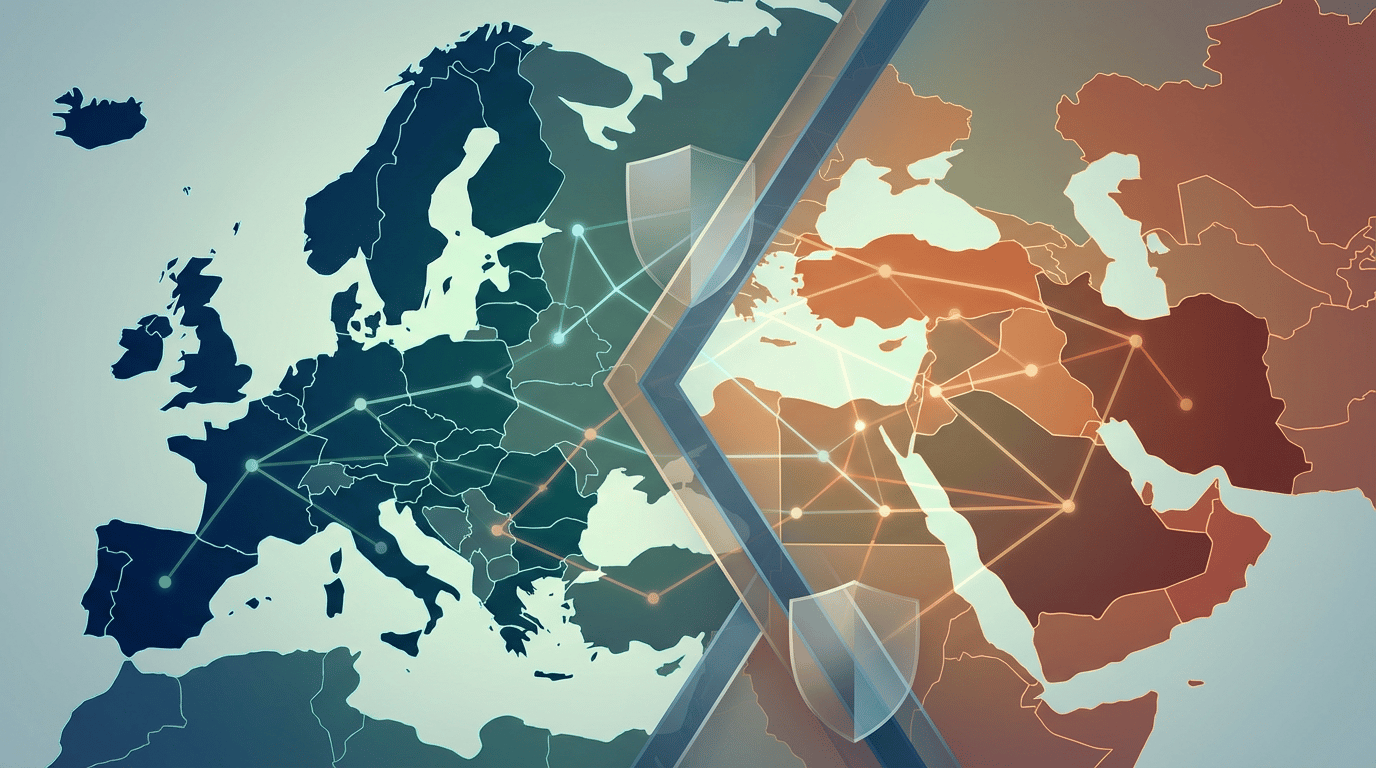
NICOSIA, CYPRUS — European Union leaders have pledged to strengthen security and economic ties with Middle Eastern partners, while advocating for a diplomatic resolution to the ongoing conflict involving Iran and addressing the critical closure of the Strait of Hormuz. Each of the bullet points immediately below have been confirmed by at least four of the six respected sources we curated on this story: reuters.com, bloomberg.com, ft.com, europa.eu, indexbox.io, inkl.com.
- The EU summit in Cyprus, attended by European Council President Antonio Costa and European Commission President Ursula von der Leyen, focused on boosting partnerships with nations including Lebanon, Egypt, Syria, and Jordan to promote regional stability.
- European leaders underscored the critical link between Europe’s security and that of the Middle East, emphasizing the necessity of cooperation on security and defense amid the geopolitical tensions.
- The conflict has led to the effective closure of the Strait of Hormuz, causing a significant “fuel crunch” in Europe and soaring oil and gas prices, prompting EU demands for its immediate and unrestricted reopening.
- While welcoming recent ceasefires, EU leaders stressed the need for a permanent path to peace, offering to fund alternative energy routes and repair damaged energy infrastructure in the Middle East to mitigate economic impacts.
Diplomatic Efforts and Economic Fallout
The EU’s diplomatic engagement aims to de-escalate the ongoing conflict and foster long-term stability in the region. Discussions also touched upon addressing Iran’s nuclear and ballistic missile programs, with sanctions remaining in place until these issues are resolved.
The economic ramifications of the Strait of Hormuz closure extend globally, affecting supply chains and energy markets far beyond the immediate region. The EU’s proactive approach seeks to safeguard its energy security and mitigate disruptions to trade.
Humanitarian aid to countries like Lebanon, which has suffered infrastructure damage due to the conflict, is also a key component of the EU’s comprehensive strategy for the Middle East.
German Chancellor Friedrich Merz criticized the US-Israeli war with Iran as “completely unnecessary,” highlighting the broad geopolitical and economic shockwaves impacting global markets and advocating for a coordinated European response.
How we report:: We select the day’s most important stories, confirm facts across multiple reputable sources, and avoid anonymous sourcing. Our goal is clear, balanced coverage you can trust—because transparency and verification matter for informed readers.
Image Attribution
Attribution: AI-generated image (Hedra.com for EOBS.biz)