
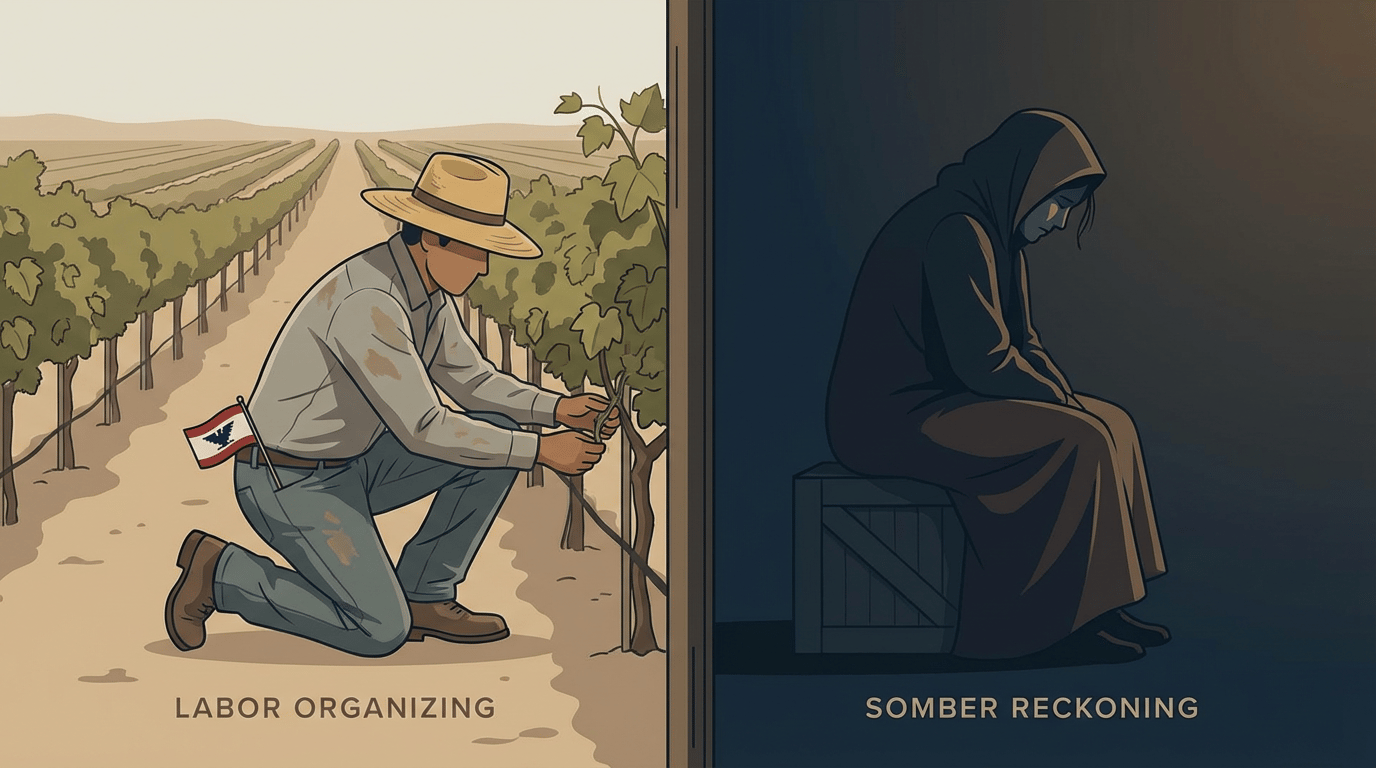
LOS ANGELES — Cesar Chavez, the revered labor leader and civil rights icon who co-founded the United Farm Workers union, has been accused of sexually assaulting Dolores Huerta, his longtime collaborator and fellow UFW co-founder, as well as sexually abusing young girls during the 1960s and 1970s according to a New York Times investigation published Wednesday. The allegations have triggered immediate fallout, with the United Farm Workers canceling Cesar Chavez Day celebrations, the Cesar Chavez Foundation expressing shock, and political leaders calling for the renaming of streets, schools, and holidays that bear his name. Each of the bullet points immediately below have been confirmed by at least four of the six respected sources we curated on this story.
• Dolores Huerta, 95, alleged that Chavez sexually assaulted her on two occasions in the 1960s, with the second encounter constituting rape in a secluded grape field in Delano, California; she stated she kept the incidents secret for 60 years fearing it would damage the farmworker movement
• Both encounters resulted in pregnancies that Huerta kept secret, arranging for the children to be raised by other families; she has since developed close relationships with those children
• Two other women, Ana Murguia and Debra Rojas, both now 66, told the New York Times that Chavez groomed and sexually abused them starting when they were 12 and 13 years old, with one alleging she was raped by Chavez at age 15 in a motel room
• The United Farm Workers union announced it is canceling its participation in Cesar Chavez Day activities scheduled for March 31, the late leader’s birthday
• The Cesar Chavez Foundation, which includes family members, issued statements expressing being “deeply shocked and saddened” and commended survivors for their courage
• Arizona Governor Katie Hobbs’ office announced the state will not honor Chavez this year; Los Angeles County Supervisor Janice Hahn called for renaming the March public holiday to “Farmworker Day”
• California Senator Alex Padilla, the first Latino elected to represent California in the Senate, announced he would work to rename proposed national park legislation to honor farmworkers rather than Chavez specifically
• Multiple cities including Milwaukee have canceled annual celebrations, while Tucson canceled its Cesar Chavez march
Additional Details Reported
The New York Times conducted an extensive investigation involving interviews with more than 60 people, including former top aides, relatives, and former UFW members, as well as review of union records, confidential emails, photographs and recordings of board meetings. The newspaper could not independently corroborate Huerta’s specific allegations.
Eliseo Medina, a longtime UFW leader who served on the board from 1973 to 1978 and was once considered a likely successor to Chavez, told NBC News the allegations left him “very sad” and confused, stating “The man I thought he was, was someone else.” Medina said he is angry “because all those years we worked together and the things we shared, the values and what we were fighting for, it just seems he didn’t believe in those things.”
Delia Garcia, a former Kansas state labor secretary who has been mentored by Huerta for 26 years, told NBC News her family would be removing photos of Chavez from their home, stating she “stands with Dolores” and the other survivors.
Chavez, who died in 1993 at age 66, became a national figure during the 1960s for organizing farmworkers struggling for better wages and working conditions, employing hunger strikes and leading a famed national boycott of California grapes. He has been honored with the Presidential Medal of Freedom, and President Barack Obama established the Cesar Chavez National Monument at UFW headquarters near Bakersfield, California in 2012.
Labor advocates and scholars noted that the revelations could provide an opportunity to reconsider the importance of female workers and activists in the movement, rather than attributing its collective successes to one man. Matt Garcia, a Dartmouth College professor who wrote a 2012 history on Chavez and the farmworker movement, said the union facilitated Chavez’s unchecked power by failing to build democratic processes that could have protected those at odds with him.
Some Latino and farmworker advocacy groups had previously criticized Chavez’s anti-immigrant stances, including his support for hard-line immigration enforcement against undocumented immigrants. The UFW and Cesar Chavez Foundation said they are establishing a “safe and confidential process” for those who wish to share experiences of historic harm.
Image Attribution
Artificial Intelligence generated image / EOBS.biz
How we report: We select the day’s most important stories, confirm facts across multiple reputable sources, and avoid anonymous sourcing. Our goal is clear, balanced coverage you can trust—because transparency and verification matter for informed readers.