
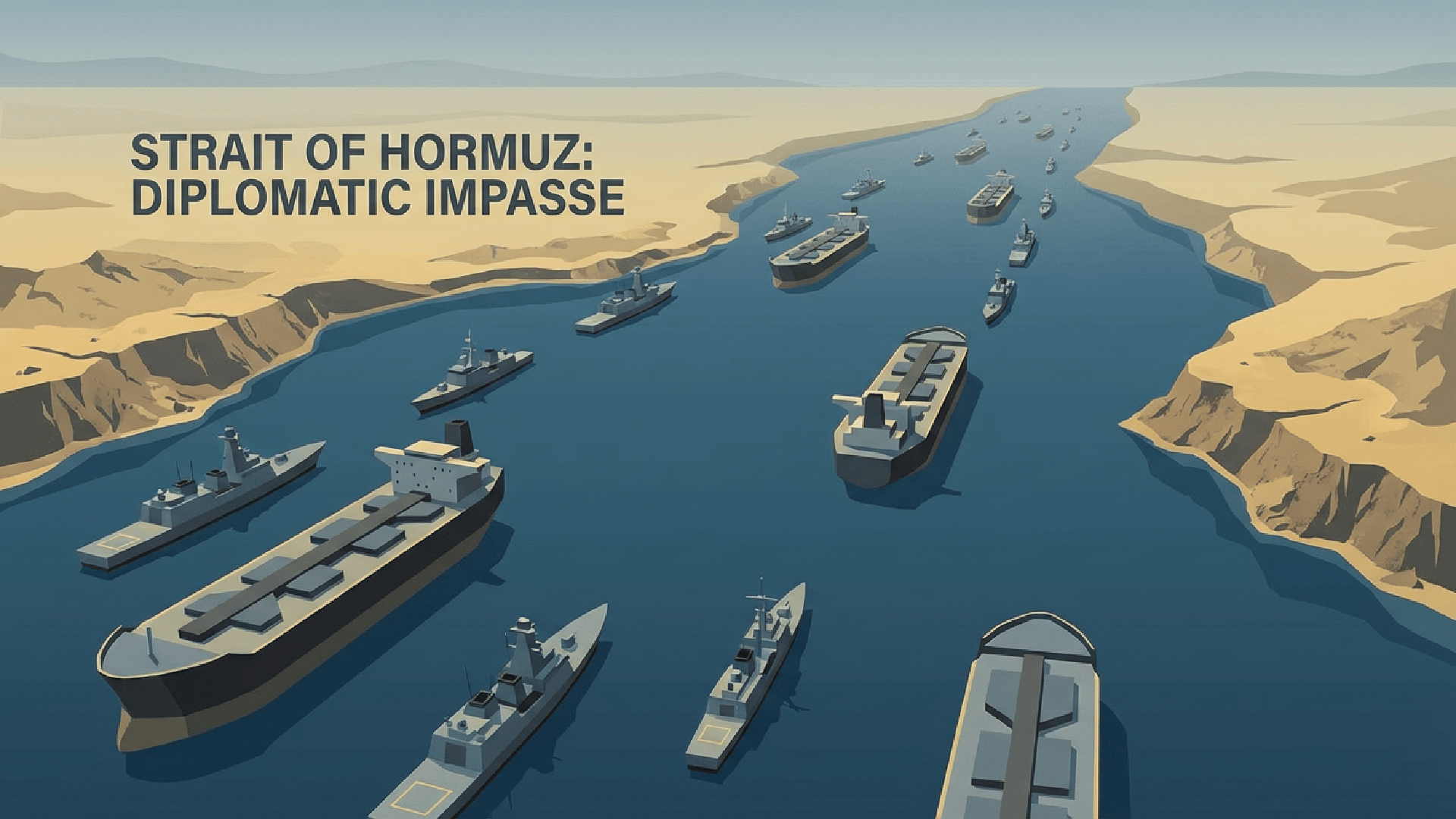
WASHINGTON — President Donald Trump demanded Monday that NATO allies and other global partners send warships to help secure the Strait of Hormuz, warning that lack of support would be “very bad for the future of NATO,” but key U.S. partners including Germany, the United Kingdom, Spain and Italy swiftly rejected his calls, saying they would not be drawn into the widening war with Iran. The unprecedented rift between the United States and its closest allies comes as the critical waterway through which roughly 20 percent of global oil trade flows remains largely blocked, fueling soaring energy prices and fears of worldwide inflation. Coverage from Associated Press, BBC News, NPR, Deutsche Welle, Sky News, and CBC News all confirm the allied resistance to Trump’s demands and the mounting tensions over the three-week-old conflict. Each of the bullet points immediately below have been confirmed by at least four of the six respected sources we curated on this story.
- Trump called on approximately seven countries including China, Japan, South Korea, the United Kingdom, France and others to send warships to secure the Strait of Hormuz, a critical passageway for global energy trade that Iran has effectively closed to U.S. and allied shipping.
- German Chancellor Friedrich Merz explicitly rejected any NATO role in policing the strait, stating that Washington and Israel did not consult allies before launching the war and that Germany lacks the mandate required under its Basic Law for such military involvement.
- U.K. Prime Minister Keir Starmer resisted Trump’s demands, saying Britain was working with allies on a plan to reopen the strait but emphasized that the United Kingdom “will not be drawn into the wider war” and would not dispatch warships.
- Italian Deputy Prime Minister Matteo Salvini said Italy would not send ships to the strait, declaring that “Italy is not at war with anyone and sending military ships in a war zone would mean entering the war.”
- Spanish officials also confirmed they would not participate in any military operation to secure the waterway, joining Germany, Italy and the U.K. in rejecting Trump’s call for a naval coalition.
- China called for an end to hostilities but would not commit to helping secure the strait, with Foreign Ministry spokesperson Lin Jian saying only that Beijing is in talks with different parties to work for de-escalation.
- Japan, bound by strict constitutional limits on overseas military deployments, said it has not made any decisions about dispatching escort ships and is examining what can be done within its legal framework.
- Australia explicitly ruled out sending ships to the strait, with Transport Minister Catherine King stating the country “won’t be sending a ship to the Strait of Hormuz.”
- The European Union’s foreign policy chief Kaja Kallas said the bloc has “no appetite” to expand its existing naval mission in the Red Sea to the Strait of Hormuz, declaring “this is not Europe’s war.”
- South Korea said “adequate time for deliberation” is needed to consider Trump’s request, without making any commitment to provide naval support.
Additional Details Reported
Trump warned in an interview with the Financial Times that the NATO alliance could face a “very bad” future if allies fail to help police the strait. Speaking aboard Air Force One on Sunday, he said he would remember which countries supported the effort and which did not, adding that “some are very enthusiastic about it, and some aren’t.”
The U.S. president also indicated he may delay a planned late-March summit with Chinese President Xi Jinping, saying he has asked China to postpone the trip “a month or so” because of the war. Treasury Secretary Scott Bessent attempted to downplay the potential delay, saying any rescheduling would be due to logistics rather than disputes over the strait.
Israeli military officials said Monday they have detailed plans for at least three more weeks of war and that thousands of targets remain in Iran. The Israeli-U.S. assault has killed more than 1,300 Iranians, according to a death toll cited by Iran’s ambassador to the United Nations last week.
Canada, France, Germany, Italy and Britain issued a joint statement warning Israel against launching a ground offensive in Lebanon, saying such an operation “would have devastating humanitarian consequences and could lead to a protracted conflict” and “must be averted.”
Iran’s Islamic Revolutionary Guard Corps threatened to target U.S. industrial facilities in the Middle East and urged people living near U.S.-owned plants to leave. Iranian officials also warned they would target oil and gas facilities in any country from which U.S. attacks were launched on Kharg Island, the country’s main oil hub.
The conflict has entered its third week with no end in sight. U.S. Central Command said approximately 200 American troops have been injured since the start of hostilities, though the vast majority suffered minor injuries and 180 have returned to duty.
Israeli forces have begun ground operations in southern Lebanon as the war expands beyond Iran’s borders. Iranian drones temporarily shut Dubai’s airport over the weekend and hit a fuel tank near the facility, affecting thousands of travelers and forcing flight diversions.
Oil prices have risen above $100 per barrel, raising concerns about global inflation and economic disruption as the Strait of Hormuz remains largely inaccessible to Western shipping.
Image Attribution
Artificial Intelligence generated image / EOBS.biz
How we report: We select the day’s most important stories, confirm facts across multiple reputable sources, and avoid anonymous sourcing. Our goal is clear, balanced coverage you can trust—because transparency and verification matter for informed readers.