
LONDON, Feb. 22, 2026 — Researchers at the University of Surrey say a sodium-ion battery cathode performs far better when its water content is left intact, a change that nearly doubles charge capacity and keeps the material stable for hundreds of cycles, ScienceDaily reported.
The finding tackles a longstanding bottleneck in sodium-ion chemistry and could help the cheaper, more abundant element compete with lithium for energy storage, according to the university release distributed via EurekAlert.
Keeping water inside the cathode
In the Journal of Materials Chemistry A paper, the team describes nanostructured sodium vanadate hydrate (NVOH), whose wider interlayer spacing allows more sodium ions to intercalate and boosts capacity compared with its dehydrated form.
The hydrated material stored almost twice the charge of typical sodium-ion cathodes, charged faster and remained stable for more than 400 cycles, Technology Networks reported.
Saltwater tests show desalination
Surrey researchers also tested the cathode in salt water and found it continued to operate while pulling sodium ions out of solution, the university said in its news release.
Paired with a graphite counter-electrode that removed chloride ions, the setup enabled electrochemical desalination and hints at future systems that store energy while producing fresh water, EurekAlert noted.
Implications for storage
If the performance gains scale, sodium-ion batteries could become a safer, lower-cost option for grid storage and some electric-vehicle uses, ScienceDaily said.
Because the approach relies on keeping water in the structure rather than adding new materials, it could simplify manufacturing and speed commercialization, Technology Networks reported.
The study remains at the laboratory stage, and the authors say further testing of full cells and long-term durability will be needed before large-scale deployment, the RSC paper notes.
How we report: We select the day’s most important stories, confirm facts across multiple reputable sources, and avoid anonymous sourcing. Our goal is clear, balanced coverage you can trust—because transparency and verification matter for informed readers.
Image Attribution ▾
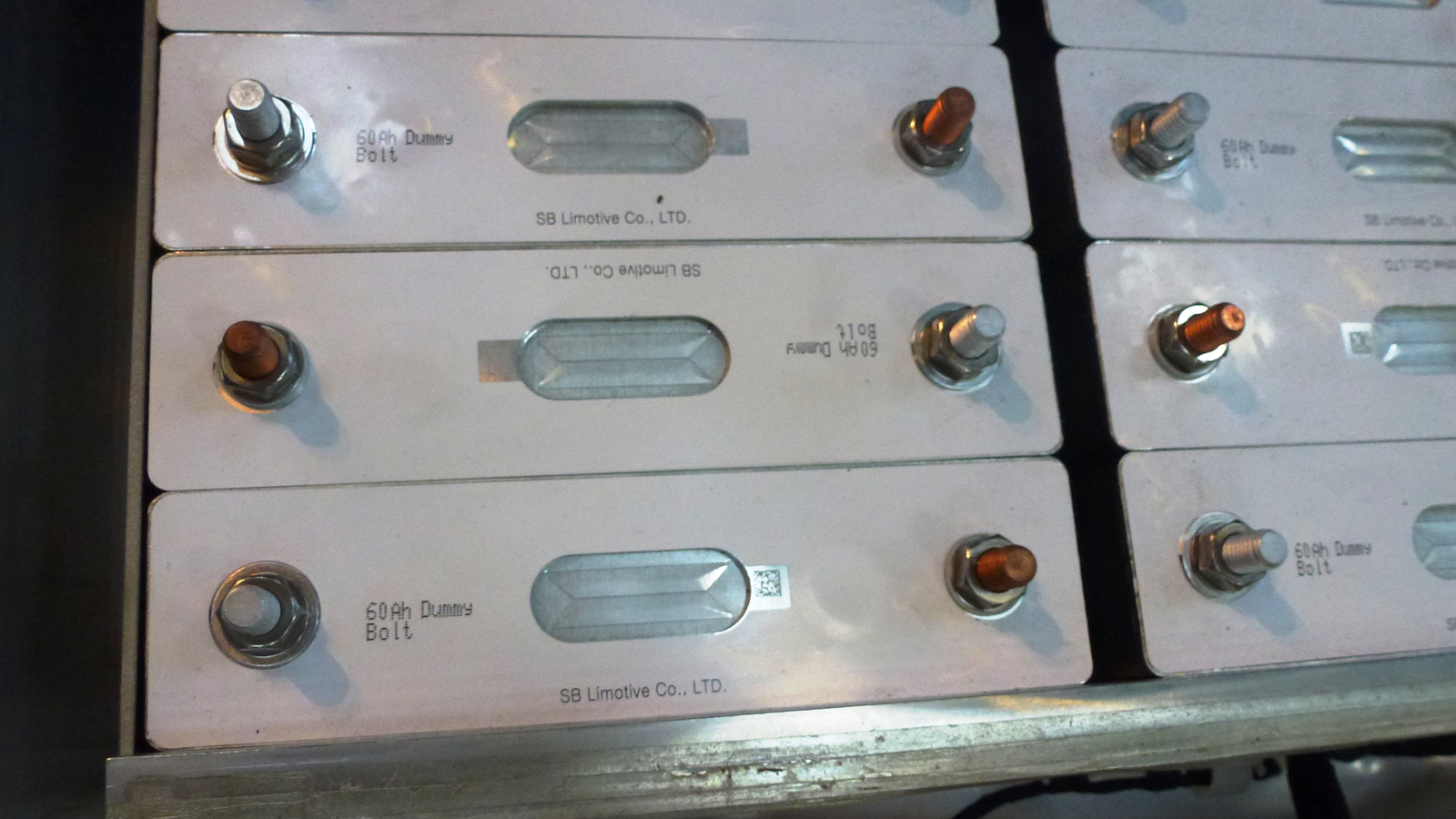
Image: “Lithium-Ion Battery for BMW i3 – SB-LiMotive Cells” by RudolfSimon, CC BY-SA 3.0. Source: https://commons.wikimedia.org/wiki/File:Lithium-Ion_Battery_for_BMW_i3_-_SB-LiMotive_Cells.JPG. License: https://creativecommons.org/licenses/by-sa/3.0/. Modifications: cropped and resized to 1920×1080 (16:9).