
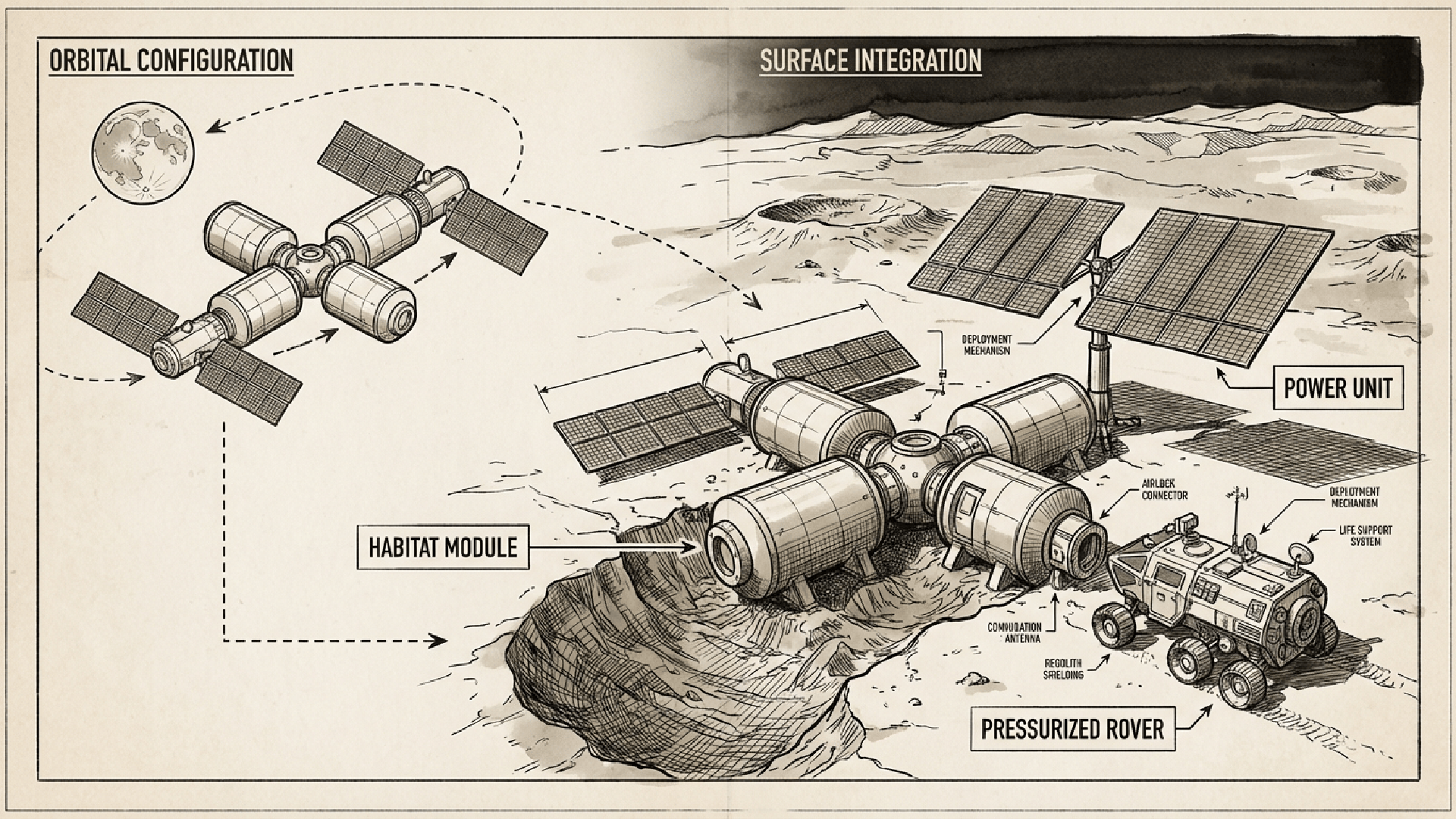
WASHINGTON, D.C. — NASA says it will pause the planned Lunar Gateway outpost in lunar orbit and redirect its hardware toward building a $20 billion moon-surface base over the next seven years, a shift outlined by NASA Administrator Jared Isaacman at the agency’s headquarters. Coverage of the announcement was reported by The Guardian, Al Jazeera, CBS News, CBC News, Deutsche Welle, and Spaceflight Now. Each of the bullet points immediately below have been confirmed by at least four of the six respected sources we curated on this story.
Core Facts
- NASA said it is pausing the Lunar Gateway project in its current form, effectively shelving plans for an orbiting lunar station as the agency refocuses on surface-based operations.
- The agency said it will instead repurpose Gateway components and partner commitments where possible to support infrastructure intended for sustained activity on the Moon’s surface, acknowledging there are real hardware and schedule challenges in shifting course.
- NASA leadership said the pivot includes an investment of about $20 billion over the next seven years to develop the moon-surface base, representing a major reorientation of priorities under the Artemis program.
- Administrator Jared Isaacman—who took over the role in December—presented the changes during a Washington, D.C., event and contractor meetings, emphasizing that the new focus is long-term operations rather than brief, symbolic visits.
- Multiple outlets reported the shift is unfolding amid intensifying international competition in lunar exploration, including China’s stated goal of a crewed Moon landing by 2030, adding urgency to U.S. planning and contracting.
- Gateway had been designed as a research platform and transfer point for astronauts and lunar landers; pivoting away from it in favor of a surface base is expected to ripple across existing contracts and partner roles tied to the station’s development.
Additional Details Reported
Several outlets, including CBS News and Spaceflight Now, described the proposed base as being planned near the lunar south pole and featuring surface habitats, pressurized rovers and nuclear power systems. Those reports also said Isaacman framed the strategy as a “step-by-step” ramp-up to reduce risk while increasing the cadence of crewed missions.
Al Jazeera reported that NASA’s broader overhaul also advances plans for a nuclear-powered spacecraft aimed at demonstrating nuclear-electric propulsion en route to Mars. Spaceflight Now and CBS News reported related details about a Mars demonstration mission in 2028 that would use a fission reactor to power propulsion and deploy small helicopters to survey potential landing zones.
In a separate thread of coverage, Al Jazeera noted uncertainty about how the new direction could affect international partners that had planned contributions for an orbiting station. CBC News and Deutsche Welle also highlighted contractor involvement in Gateway development and the practical complexity of repurposing already-built hardware.
Image Attribution
Artificial Intelligence generated image / EOBS.biz
How we report: We select the day’s most important stories, confirm facts across multiple reputable sources, and avoid anonymous sourcing. Our goal is clear, balanced coverage you can trust—because transparency and verification matter for informed readers.