WASHINGTON, Feb. 24 — Astronomers have produced the first three‑dimensional map of Uranus’s upper atmosphere using the James Webb Space Telescope, revealing how temperature and charged particles change with altitude and helping explain how the ice giant moves energy through its upper layers, according to the ESA and ESA/Webb releases.
The team observed Uranus for nearly a full rotation with Webb’s NIRSpec instrument, detecting faint molecular emissions high above the clouds and delivering a vertical view of the planet’s ionosphere, the NASA image article said; the same observation strategy is described in the Northumbria University announcement.
A new vertical map
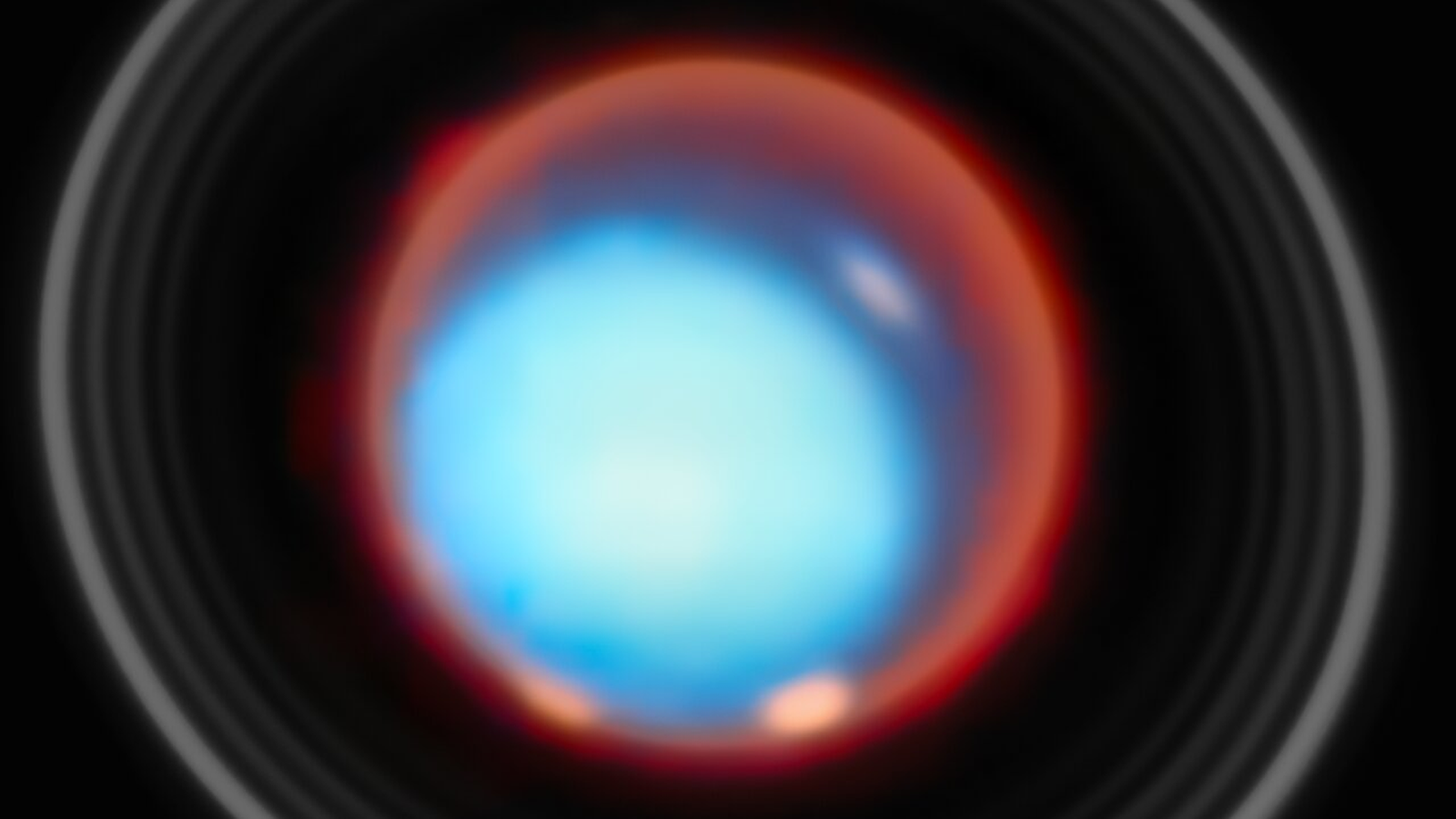
The measurements track conditions as far as 5,000 kilometers above the cloud tops and show that temperatures peak between 3,000 and 4,000 kilometers, while ion densities reach their maximum around 1,000 kilometers, details highlighted by ESA/Webb and ScienceDaily.
The results also reveal clear longitudinal variations tied to Uranus’s complex magnetic geometry, which the ESA release notes is unusually tilted and offset compared with most planets, shaping where auroras form.
Auroras and magnetic oddities
Webb’s data show two bright auroral bands near the magnetic poles and a region of reduced emission between them, a signature that mirrors magnetically controlled dark zones seen at Jupiter, according to ESA/Webb and Northumbria University.
The observations confirm that Uranus’s upper atmosphere is still cooling, extending a trend that began in the early 1990s, and the team reported an average temperature of about 426 kelvins (around 150°C), the NASA and ScienceDaily summaries said.
Why the cooling matters
Researchers say the planet’s oddly tilted magnetosphere makes its auroras sweep across the surface in complex ways, and understanding that energy balance helps scientists compare Uranus and Neptune to exoplanetary ice giants beyond our Solar System, points emphasized in the ESA and Northumbria University reports.
The study was published in Geophysical Research Letters and drew on data from JWST General Observer program 5073, signaling a new benchmark for studying ice‑giant atmospheres with Webb’s sensitivity, as noted by ScienceDaily and ESA/Webb.
How we report: We select the day’s most important stories, confirm facts across multiple reputable sources, and avoid anonymous sourcing. Our goal is clear, balanced coverage you can trust—because transparency and verification matter for informed readers.
Image Attribution ▾
Image: Uranus (January 2025) (weic2602a) Credit: ESA/Webb, NASA, CSA, STScI, P. Tiranti, H. Melin, M. Zamani (ESA/Webb) Source: https://esawebb.org/images/weic2602a/ License: Creative Commons Attribution 4.0 International (CC BY 4.0) per ESA/Webb usage policy https://esawebb.org/copyright/ Modifications: Center-cropped to 16:9 and resized to 1920×1080.