
WASHINGTON, D.C. — President Donald Trump proposed setting the U.S. military budget at $1.5 trillion for fiscal year 2027, a 66% increase over current spending levels that budget analysts estimate would add nearly $6 trillion to the national debt over the next decade. Six primary accounts informed this report: PBS Newshour, CBS News, AP News, Committee for a Responsible Federal Budget, Fox Business, and Air & Space Forces Magazine.
Each of the bullet points immediately below have been confirmed by at least four of the six respected sources we curated on this story.
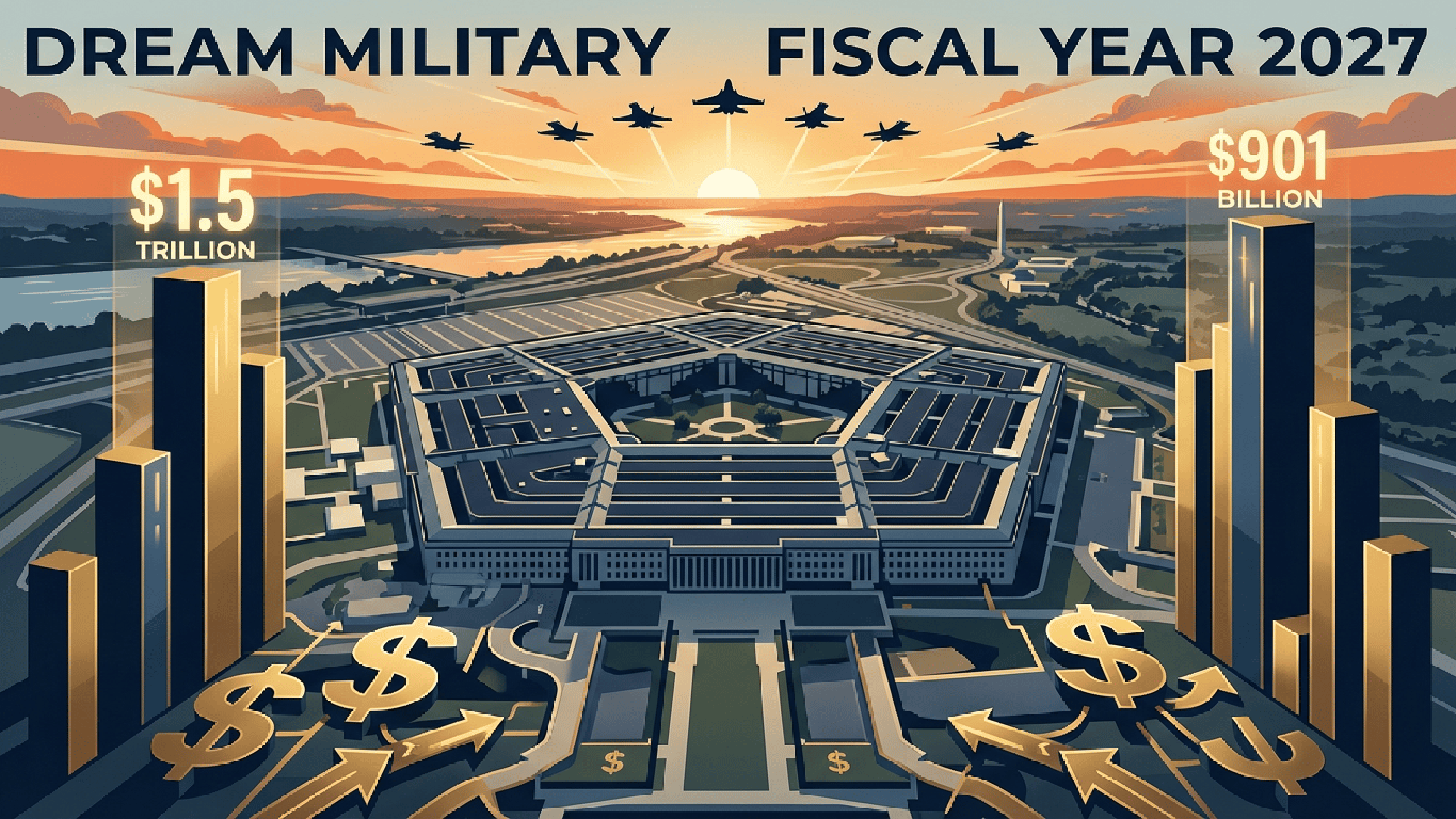
- Trump announced the $1.5 trillion defense budget proposal on Truth Social, representing a roughly 66% increase over the 2026 military budget of $901 billion.
- The President cited “troubled and dangerous times” as justification for what would be one of the largest single-year military spending increases in U.S. history.
- Trump stated the funding would allow the United States to build what he called the “Dream Military” that would keep the country “SAFE and SECURE, regardless of foe.”
- The nonpartisan Committee for a Responsible Federal Budget estimates that a $1.5 trillion annual defense budget would add $5.8 trillion to the national debt over the next decade when interest costs are included.
- Trump claimed that increased revenue from tariffs imposed by his administration would cover the increased military spending, though analysts note tariff revenue would cover only a fraction of the proposed increase.
- Pentagon comptroller Jules Hurst III confirmed the department’s fiscal 2027 budget request will be released in the coming weeks but acknowledged the $1.5 trillion topline faces “heavy political pushback” in Congress.
Additional Details Reported
The massive spending proposal comes as the military is already engaged in Operation Epic Fury, the ongoing air campaign against Iran that Pentagon officials said cost roughly $11.3 billion in its first six days alone. The budget increase also follows a $175 billion boost the military received from the GOP’s “One Big Beautiful Bill Act” signed into law last year.
Congressional reaction has been mixed along partisan lines. Rep. Rob Wittman (R-Va.), vice chair of the House Armed Services Committee, stated his committee would “mark to $1.5 trillion” as requested. However, Rep. Adam Smith, the committee’s top Democrat, expressed skepticism: “I don’t see a $1.5 trillion budget coming through this Congress. If it did, it would set us up for pretty big failure down the road.”
The proposal also drew immediate reaction from defense contractors. Trump simultaneously threatened to cut off Pentagon purchases from Raytheon unless the company ended stock buybacks and increased investment in manufacturing capacity. Defense stocks fell following the announcements, with Northrop Grumman dropping 5.5%, Lockheed Martin declining 4.8%, and RTX Corp. slipping 2.5%.
Analysts note the proposal faces hurdles beyond partisan opposition. The Congressional Budget Office estimates that current tariffs would raise approximately $2.5 trillion through 2035—roughly half the amount needed to cover the proposed defense increase over that period. Additionally, the Supreme Court is expected to rule soon on the legality of tariffs imposed under the International Emergency Economic Powers Act, which could further reduce projected revenue.
Image Attribution ▾
Description: STORY SUMMARY: President Trump proposed a $1.5 trillion defense budget for FY2027, a 66% increase over current levels. MUST INCLUDE: The Pentagon building or military/defense imagery; Financial/budget elements; American symbols or official government context. STYLE: modern editorial illustration, clean lines, balanced palette, dignified institutional tone.
(Artificial intelligence created image: Hedra.com / EOBS.biz)
How we report: We select the day’s most important stories, confirm facts across multiple reputable sources, and avoid anonymous sourcing. Our goal is clear, balanced coverage you can trust—because transparency and verification matter for informed readers.