
HONOLULU, Feb. 27, 2026 — A new study says nearly all forest birds in Hawaiʻi can pass avian malaria to mosquitoes, helping explain why the disease turns up almost everywhere mosquitoes live across the islands, according to University of Hawaiʻi System News and ScienceDaily.
The research, led by a University of Hawaiʻi at Mānoa scientist and published Feb. 10 in Nature Communications, found avian malaria at 63 of 64 sites tested statewide and tied the spread to the generalist parasite Plasmodium relictum, as reported by UH System News and the UH Mānoa news release.
How researchers tested transmission
Scientists analyzed blood samples from more than 4,000 birds across Kauaʻi, Oʻahu, Maui and Hawaiʻi Island, then paired those field data with lab experiments measuring how readily mosquitoes became infected after feeding, according to UH System News and ScienceDaily.
They combined 1,275 measurements of malaria levels in 17 bird species—seven native and 10 introduced—and found that even birds with very low parasite loads could still infect mosquitoes, a result highlighted by UC Santa Cruz and Phys.org.
Why bird communities all carry risk
The study’s statewide sweep showed malaria at 63 of 64 sites with very different mixes of birds, indicating transmission can persist across varied communities wherever temperatures allow mosquitoes to thrive, as described by ScienceDaily and UC Santa Cruz.
Researchers also estimated mosquito feeding patterns and found some species—such as the introduced house finch and the native ʻamakihi—receive more mosquito bites, making them key drivers of transmission, according to UC Santa Cruz.
Conservation and climate pressure
Avian malaria has helped drive steep declines in native honeycreepers; the Mānoa release notes reports showing roughly 90% mortality in ʻiʻiwi after infection and says the ʻakikiki is now considered extinct in the wild, underscoring the stakes for remaining species, per UH Mānoa.
With warming temperatures shrinking mosquito-free refuges, conservation groups say mosquito control is increasingly essential to protect remaining birds, a point emphasized by UH System News.
How we report: We select the day’s most important stories, confirm facts across multiple reputable sources, and avoid anonymous sourcing. Our goal is clear, balanced coverage you can trust—because transparency and verification matter for informed readers.
Image Attribution ▾
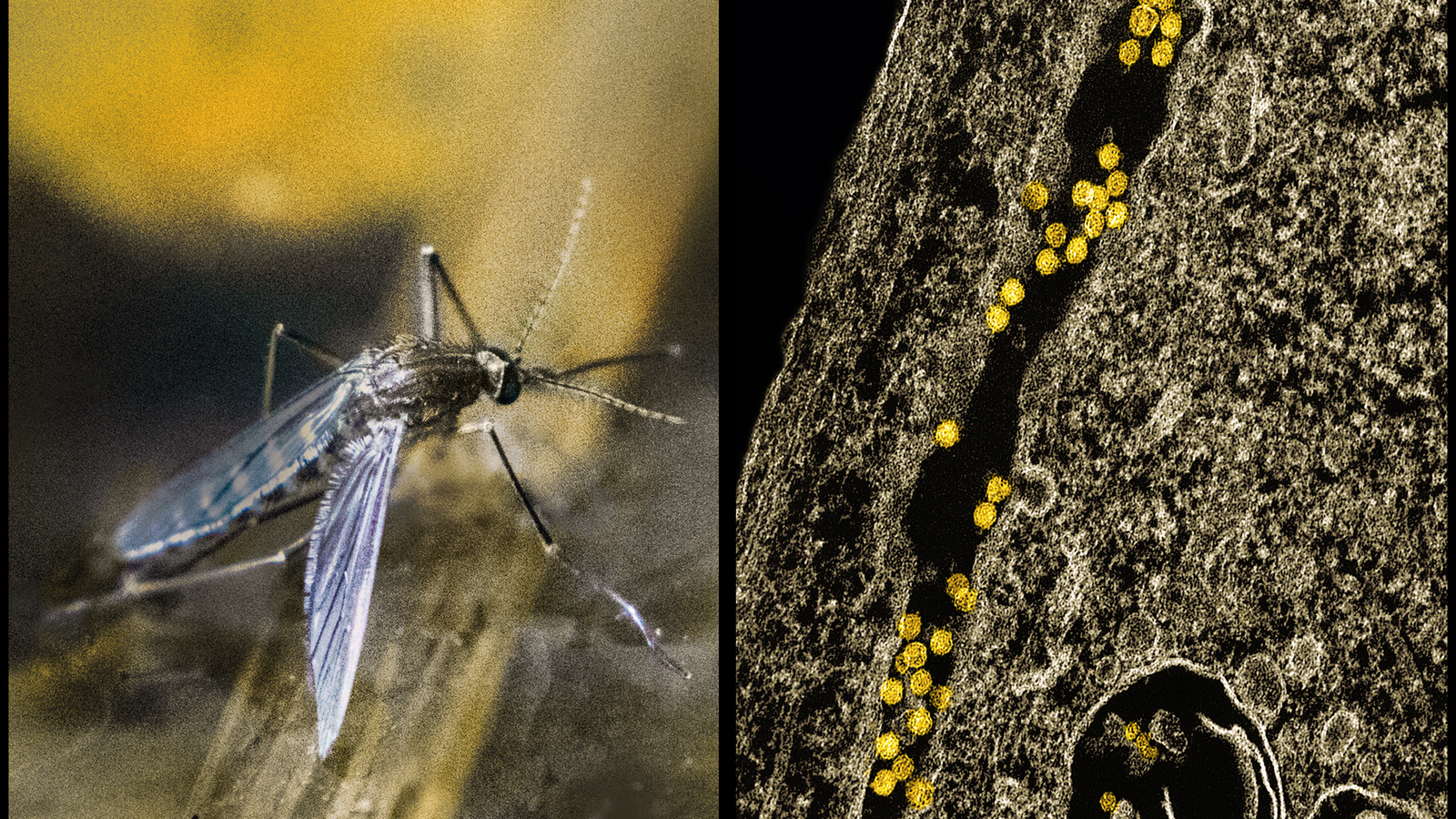
Image: “A Culex Mosquito and Micrograph of West Nile Virus Particles” by NIAID, CC BY 2.0. Source: https://commons.wikimedia.org/wiki/File:A_Culex_Mosquito_and_Micrograph_of_West_Nile_Virus_Particles.jpg. License: https://creativecommons.org/licenses/by/2.0/. Modifications: cropped and resized to 1920×1080 (16:9) and converted to PNG.