
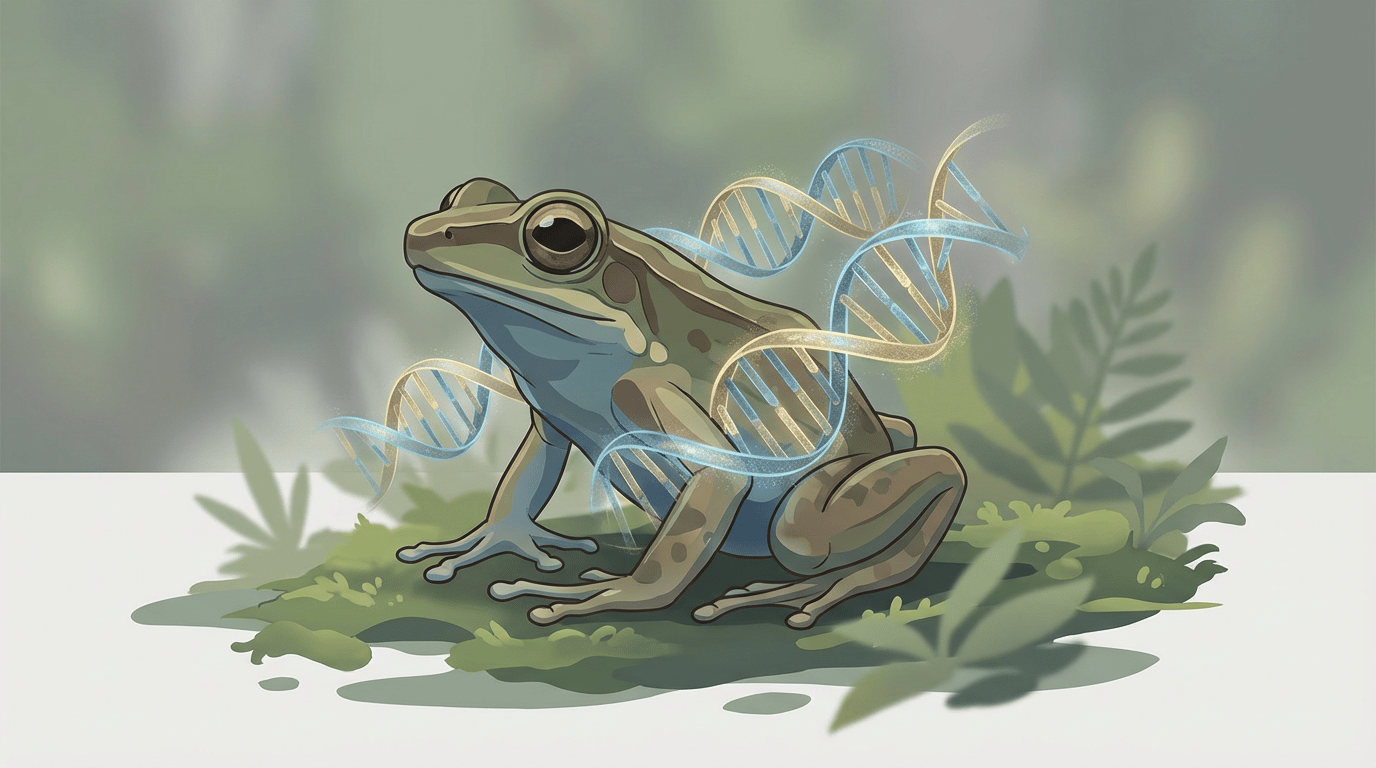
BORNEO, Malaysia — Modern DNA analysis is overturning nearly two centuries of biological classification, revealing that what was once considered a single species of “fanged frog” in Borneo is actually a cluster of genetically distinct species. Research led by Michigan State University and confirmed by reports from Phys.org, ScienceDaily, The Charlotte Observer, MoneyControl, The Miami Herald, and ScienceBlog highlights how “cryptic species”—animals that look identical but do not interbreed—are far more common than previously realized.
According to the verified findings:
- Advances in genetic sequencing identified six distinct species among Borneo’s fanged frogs, which were originally classified as a single species in 1838.
- The discovery was made by analyzing DNA from museum specimens and field collections across mountain rainforests.
- Researchers found that these species are morphologically identical (look-alikes) but genetically isolated for millions of years.
- This study emphasizes the critical role of genetic tools in accurate biodiversity counting and wildlife conservation efforts.
Additional Details Reported:
- The research was led by Chan Kin Onn of Michigan State University.
- The findings were published in a recent issue of the journal Science.
- Global amphibian numbers are in decline, making the identification of hidden species vital for targeted protection.
—
This report was generated using multiple verified news sources. All hyperlinked citations in the lead paragraph confirm the core facts of this story.