
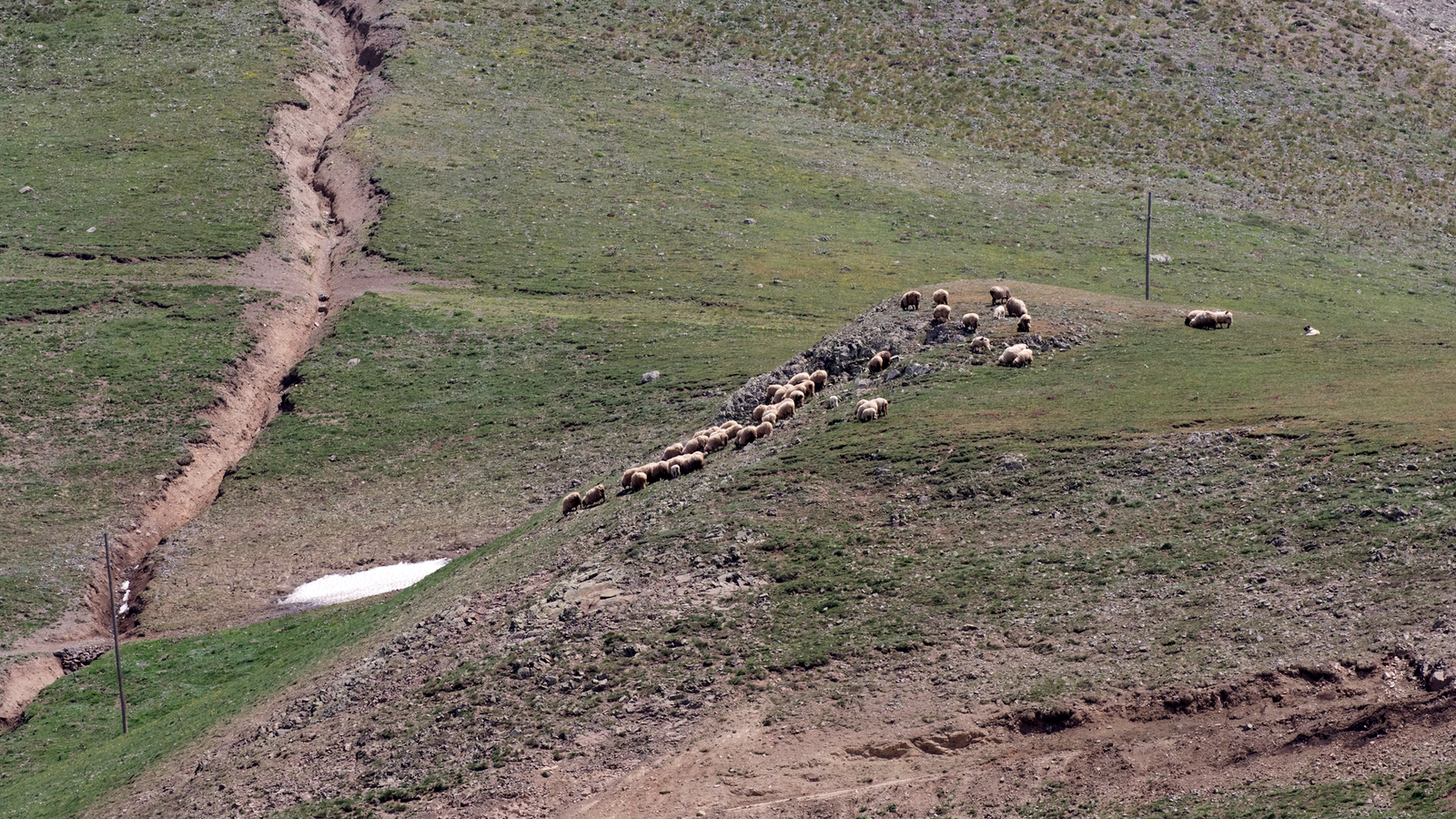
ARKAIM, Russia — A 4,000-year-old domesticated sheep has given scientists the clearest evidence yet of how an ancient plague moved across Eurasia. Researchers identified DNA from the plague bacterium Yersinia pestis in the animal’s remains, marking the first known non-human case from the Bronze Age and offering a missing link in the disease’s early spread.
The sheep came from Arkaim, a fortified settlement in the Southern Ural Mountains near today’s Kazakhstan border. Multiple outlets report the discovery from excavations of livestock bones dating to the late third millennium BCE, including University of Arkansas, Phys.org, and Discover.
Missing Link in Spread
The Bronze Age strain of Y. pestis emerged about 5,000 years ago and infected people across Eurasia for roughly two millennia before fading out. Unlike the medieval Black Death, this early lineage could not spread via fleas — a gap that long puzzled scientists. That detail is documented by ScienceDaily, Phys.org, and CNN.
By finding plague DNA in livestock, researchers argue that animal movements helped carry the pathogen across vast distances. Reports from CNN and ScienceDaily say the discovery supports a model in which people, herds and a still-unknown reservoir species sustained the infection over time.
Why Livestock Matters
Arkaim’s community belonged to the Sintashta culture, known for early horse riding and far-reaching trade routes. The researchers say those mobility gains likely increased contact between people and animals, amplifying the chances of disease spread. That cultural context is highlighted by University of Arkansas and echoed by Discover.
The research team says the sheep evidence bridges a crucial gap between human cases found thousands of kilometers apart, indicating that livestock could have acted as a transmission bridge even without flea vectors. Phys.org notes that identical Bronze Age strains have been identified in human remains spread widely across Eurasia, reinforcing the need for a mobility-based explanation.
Modern Lessons
The discovery was published in the journal Cell and underscores the role domesticated animals can play in spreading pathogens. Researchers argue that early herding economies likely raised human exposure risk through close, repeated contact with infected animals.
Scientists are now searching for the unidentified natural reservoir that kept the Bronze Age plague circulating. Both ScienceDaily and University of Arkansas describe plans to continue excavations in the Southern Urals for more human and animal samples.
The broader lesson, researchers say, is that expanding into new environments can disturb ecological balances and increase the risk of disease spillover. The ancient case offers a reminder that the link between human activity and zoonotic disease has deep roots.
Additional Details Reported
The paper’s abstract notes that the sheep genome belongs to the Late Neolithic Bronze Age (LNBA) lineage and suggests the lineage underwent ancestral gene decay and distinct selective pressures while spreading from an unidentified reservoir to livestock. These details appear in the PubMed abstract but were not widely repeated across other sources.
How we report: We select the day’s most important stories, confirm facts across multiple reputable sources, and avoid anonymous sourcing. Our goal is clear, balanced coverage you can trust—because transparency and verification matter for informed readers.
Image Attribution ▾
Title: Sheep herding on the pastures of the southern slopes of Eğribel Pass 01
Creator: Zeynel Cebeci
Source: https://commons.wikimedia.org/wiki/File:Sheep_herding_on_the_pastures_of_the_southern_slopes_of_E%C4%9Fribel_Pass_01.jpg
License: CC BY-SA 4.0 (https://creativecommons.org/licenses/by-sa/4.0)
Modifications: Cropped to 16:9 and resized to 1920×1080.
Credit line: Zeynel Cebeci, “Sheep herding on the pastures of the southern slopes of Eğribel Pass 01,” CC BY-SA 4.0, via Wikimedia Commons.