
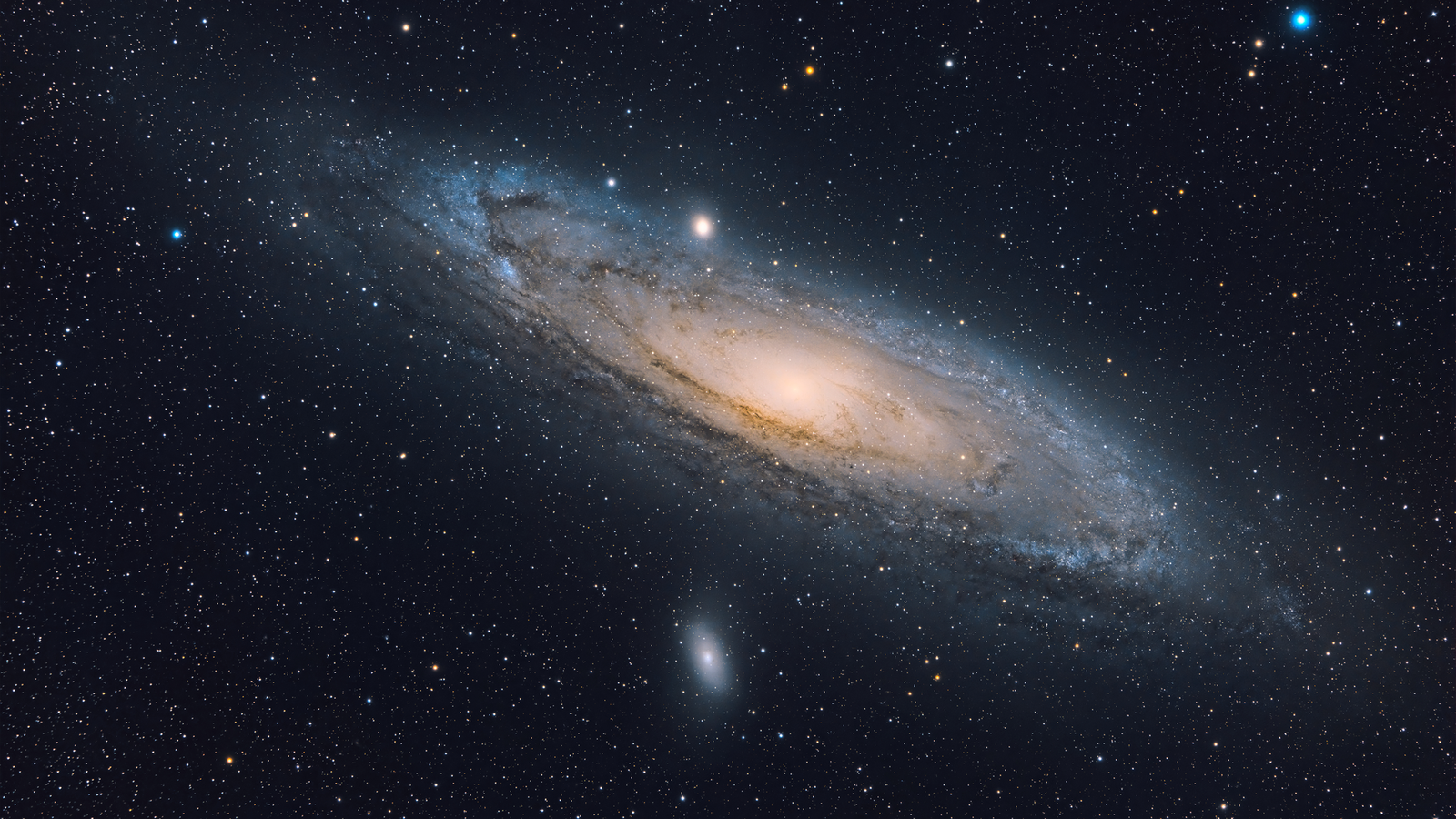
NEW YORK, Feb. 12 – Astronomers tracking a bright star in the Andromeda galaxy say it dimmed and disappeared without a supernova, evidence that it collapsed directly into a black hole, according to reports by the Simons Foundation and Space.com.
The star, labeled M31-2014-DS1 and located about 2.5 million light-years away, brightened in infrared light in 2014 and then plunged in brightness starting in 2016, fading to about one ten-thousandth of its former visible output by 2022-23, as detailed in EurekAlert and summarized by Astronomy magazine.
Failed supernova clues
The team argues the observations match models of a ‘failed supernova,’ where a massive star’s core collapses, the neutrino-driven shock fails to eject the envelope, and material falls back to form a black hole, a scenario laid out in the arXiv preprint.
Instead of a bright explosion, the remnant appears as faint mid-infrared emission from dust and gas around the newborn black hole; lead author Kishalay De said that glow should linger for decades at the sensitivity of the James Webb Space Telescope, per the Simons Foundation release.
Why it matters
If confirmed, the event adds to the small list of direct disappearances of massive stars and suggests black holes can form quietly from stars with comparatively modest masses, a point emphasized in Space.com’s coverage.
The researchers combined NASA’s NEOWISE infrared survey with follow-up observations from large telescopes to verify the star was truly gone, a data set that Astronomy magazine notes spans nearly two decades of monitoring.
What comes next
The paper calls for sustained searches of nearby galaxies to catch more stars in the act, because long-term, uniform monitoring is required to detect low-luminosity eruptions and sudden disappearances, according to the arXiv study.
The findings were published Feb. 12 in Science and are prompting renewed interest in how stellar convection and mass loss shape the end of massive stars, as outlined in the EurekAlert report.
Future infrared follow-up should reveal how the dust shell evolves and help test models of black hole formation without a classic supernova blast, the Simons Foundation said.
How we report: We select the day’s most important stories, confirm facts across multiple reputable sources, and avoid anonymous sourcing. Our goal is clear, balanced coverage you can trust-because transparency and verification matter for informed readers.
Image Attribution ▾
Image: Andromeda Galaxy (M31). Credit: Luc Viatour (Lviatour). Source: https://commons.wikimedia.org/wiki/File:M31-Andromede-16-09-2023-Hamois.jpg. License: CC BY-SA 2.0 (https://creativecommons.org/licenses/by-sa/2.0), CC BY-SA 2.5/1.0 and GFDL (per Wikimedia file page). Modifications: Cropped to 16:9 and resized to 1920×1080.