
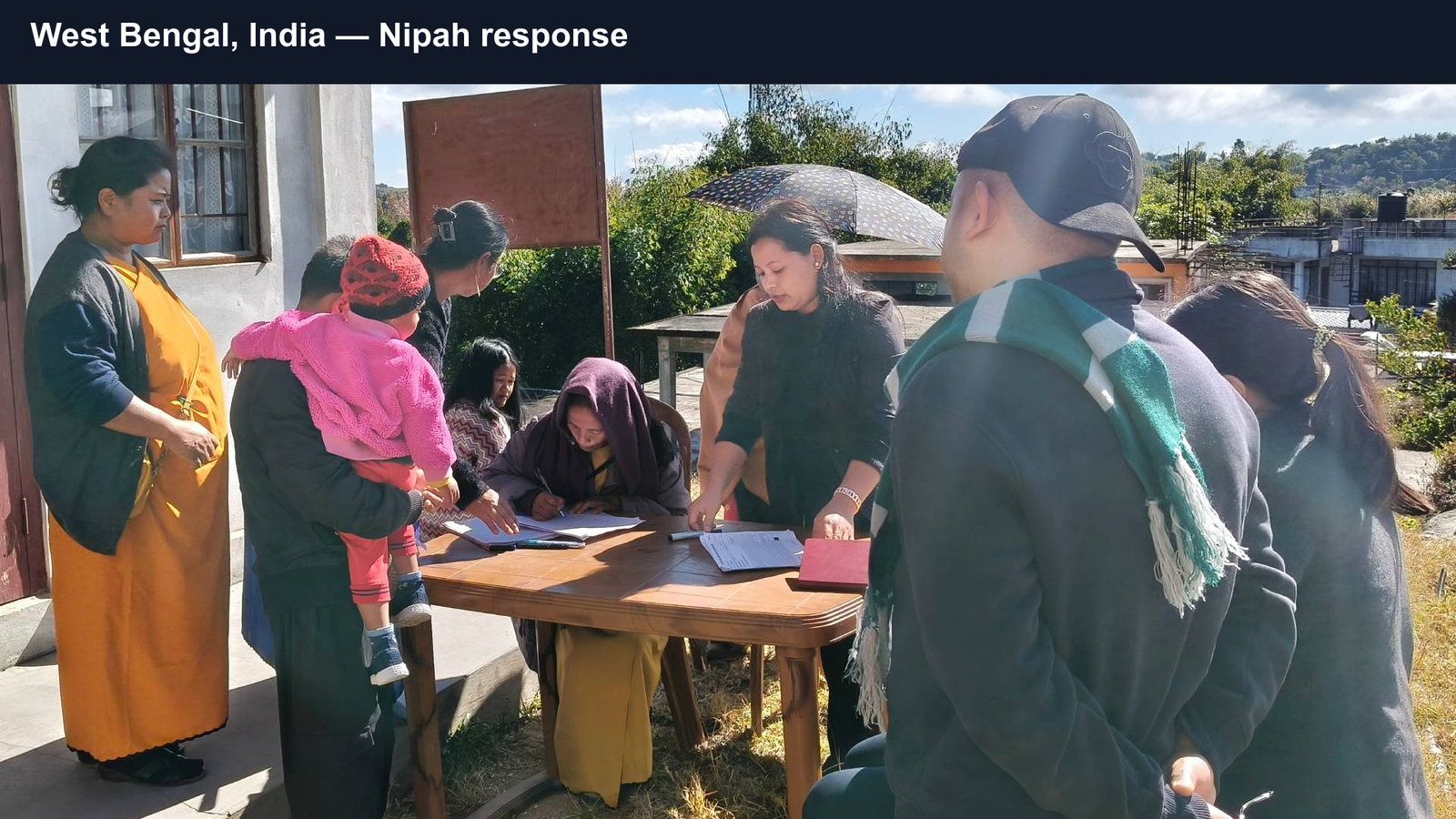
HYDERABAD, India — Feb. 4, 2026 — The World Health Organization says the risk of Nipah spreading beyond India is low after two laboratory‑confirmed infections in West Bengal, an assessment echoed in reports that the agency does not recommend travel or trade restrictions. The cases involve health workers in India’s eastern state of West Bengal who are being treated in hospital.
The WHO said there is no evidence yet of increased human‑to‑human transmission, and the agency has coordinated with Indian health authorities as investigations continue. Officials also emphasize that the source of exposure is still under investigation.
Containment measures and regional precautions
India has expanded surveillance around the cluster, with more than 190 contacts tested and all negative, according to the WHO. The agency said no further cases have been detected to date, underscoring that the current outbreak remains limited.
Even so, several governments in Asia have tightened airport precautions. Hong Kong, Malaysia, Singapore, Thailand and Vietnam have stepped up airport screening after India confirmed infections, a move also reported by outlets covering the regional response to the outbreak.
What Nipah is and why it matters
Nipah is a zoonotic virus carried by fruit bats and animals such as pigs that can cause fever and brain inflammation. The disease is severe, with a fatality rate ranging from 40% to 75%, and there are no licensed medicines or vaccines, though candidates are being tested.
Experts note that person‑to‑person spread typically requires prolonged close contact, which helps explain why small outbreaks occur from time to time rather than sustained transmission.
India’s outbreak history
The WHO says this is the third Nipah outbreak reported in West Bengal, and multiple outlets note that India has recorded seven outbreaks overall, including previous West Bengal clusters in 2001 and 2007. India also regularly reports sporadic Nipah infections in Kerala, a region long viewed as high risk for the virus.
The outbreak’s limited spread so far aligns with the WHO’s assessment that the risk is low at the national, regional and global levels, but officials say continued surveillance is essential until investigators determine how the initial exposure occurred.