
CAPE BRETON ISLAND, Nova Scotia — Scientists have unearthed the skull of a 307‑million‑year‑old animal called Tyrannoroter heberti, one of the oldest known land vertebrates adapted for eating plants, according to Reuters.
The skull is broad and heart‑shaped, with specialized teeth and strong cheek‑muscle attachment points suited for crushing tough vegetation, details reported by Sci.News and summarized in Discover Magazine.
Why it matters
Researchers say the find shows herbivory emerged earlier in terrestrial ecosystems than previously documented, a shift that helped set the stage for plant‑rich food webs that dominate today, as noted by Reuters and Sci.News.
A CT‑based 3D reconstruction of the skull let scientists see the internal tooth structure that would have been used to process fibrous plants, an approach described in Sci.News and in the reporting by Discover Magazine.
What the animal was
Tyrannoroter belonged to a group of early tetrapods called pantylid microsaurs, a lineage related to the ancestors of reptiles and mammals but not a reptile itself, as explained by Sci.News.
Based on the skull and comparable skeletons, researchers estimate the animal was about 30 centimeters (12 inches) long with a stocky, football‑sized body, according to Reuters and Discover Magazine.
Carboniferous context
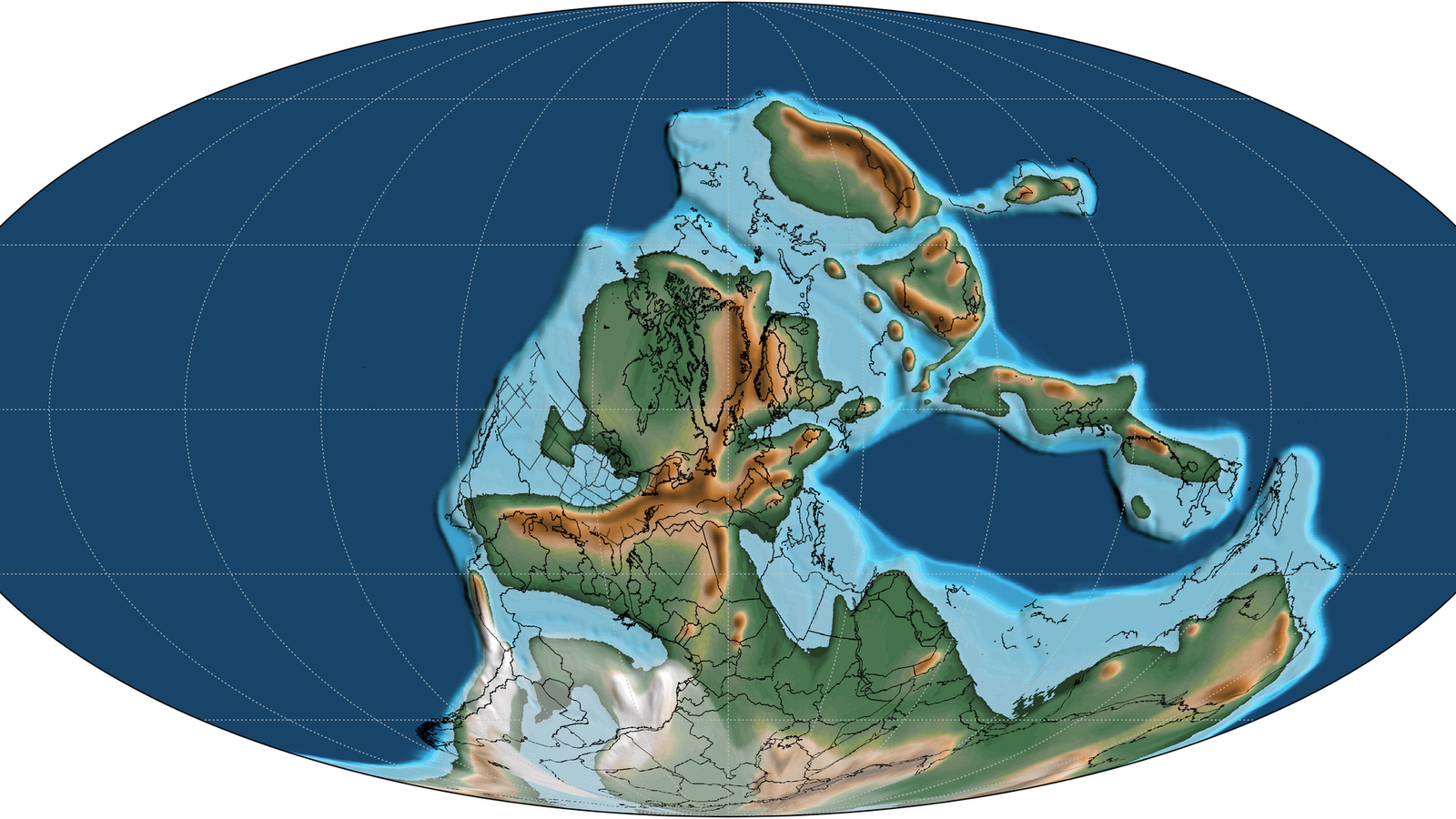
Tyrannoroter lived during the Carboniferous, when lush forests covered large parts of the planet and many of today’s coal deposits were formed, a backdrop described in the Reuters report and in the summary at Sci.News.
The study describing the fossil was published in Nature Ecology and Evolution, detailing how early land animals experimented with new diets as ecosystems matured.
How we report: We select the day’s most important stories, confirm facts across multiple reputable sources, and avoid anonymous sourcing. Our goal is clear, balanced coverage you can trust—because transparency and verification matter for informed readers.
Image Attribution ▾
Image: “Mollweide Paleographic Map of Earth, 330 Ma (Serpukhovian Age)” — Christopher R. Scotese, Christian Vérard, Landon Burgener, Reece P. Elling, Ádám T. Kocsis (PALEOMAP Project). Source: https://commons.wikimedia.org/wiki/File:Mollweide_Paleographic_Map_of_Earth,_330_Ma_(Serpukhovian_Age).png (direct file: https://upload.wikimedia.org/wikipedia/commons/0/00/Mollweide_Paleographic_Map_of_Earth%2C_330_Ma_%28Serpukhovian_Age%29.png). License: CC BY 4.0. Modified: cropped and resized to 1920×1080.